Augustas Serapinas
∗1990, Lithuania
Augustas Serapinas (1990, Vilnius, Lithuania) lives and works in Vilnius. Serapinas creates large-scale installations using materials and architectural elements withdrawn from local historical, cultural, and political context. By dismantling and reconfiguring, him presenting these elements within the exhibition space alters the way in which they can be perceived. Through spatial and material interventions, the artist draws attention to the narratives embedded within the structures – the memories, people, and places they bear witness to.“We always think of the house as a very monumental concept, but in the case of wooden vernacular architecture, it can be dismantled, moved, and reassembled into something else. [...] This way, I reveal the most important idea of such buildings – modularity. When I deconstruct it and show its parts, I think about the essence of this type of architecture. I work only with houses that are clearly going to be destroyed. However, sometimes it is also natural that these buildings disappear; it can be part of the process.”
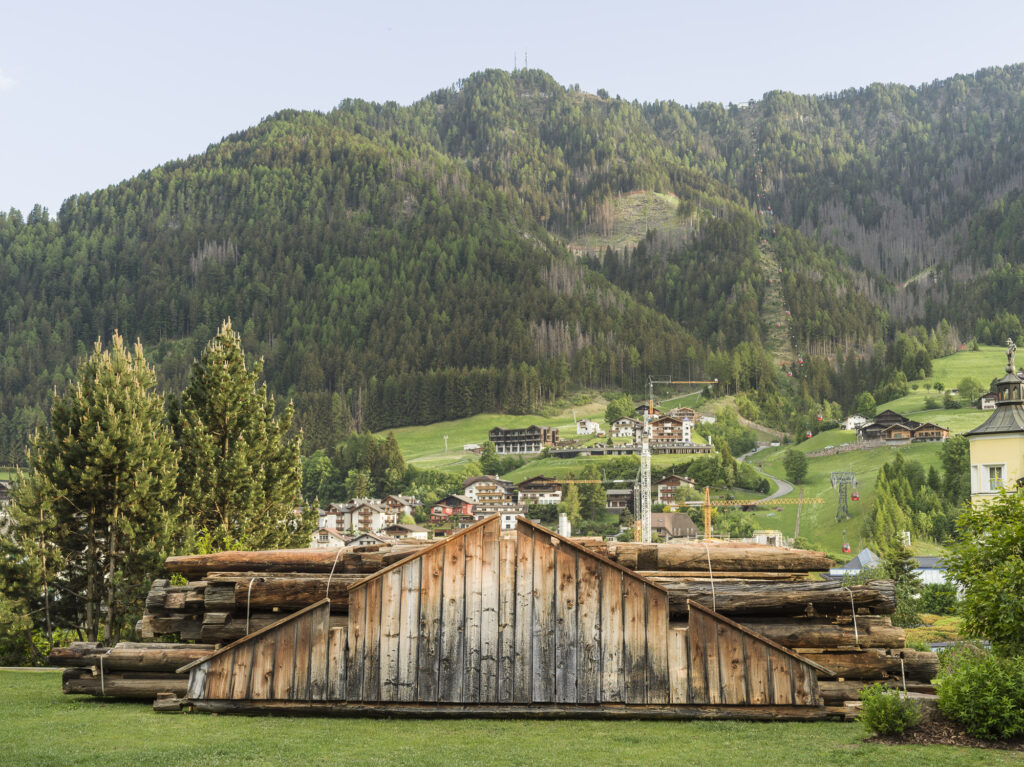
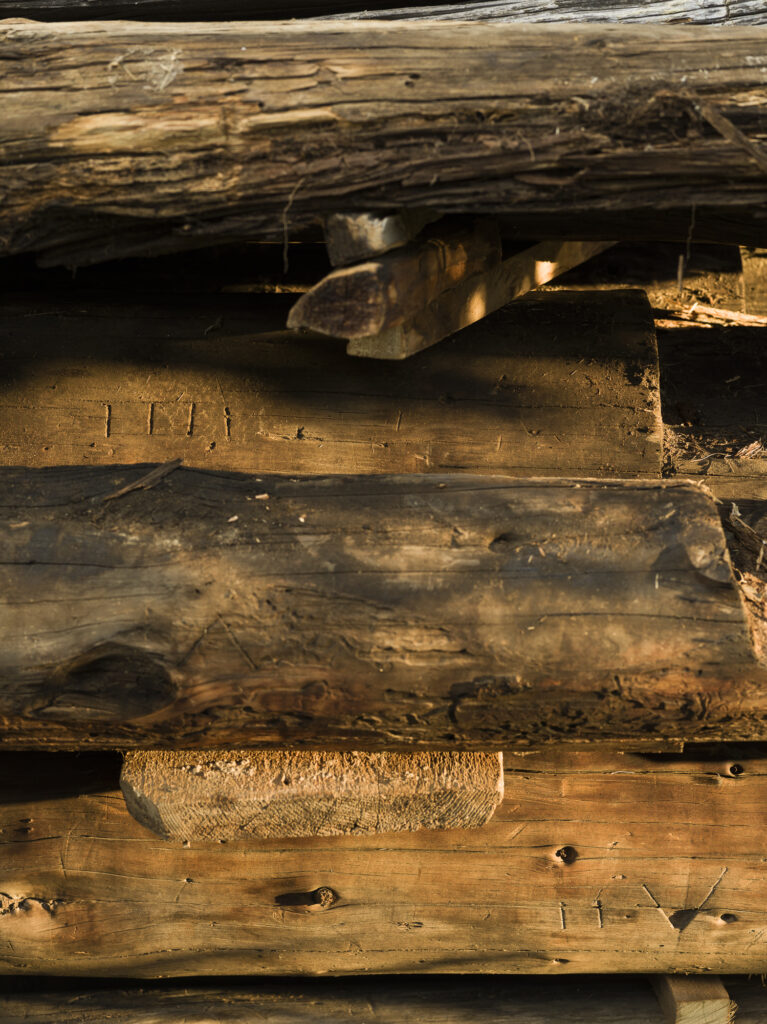
For the Biennale, Serapinas relocates a vernacular log cabin from the Seiser Alm plateau. Originally used as a hay barn equipped with a small kitchen and sleeping area, the structure had fallen into disrepair and was slated for dismantling. Drawing on its Blockbau construction, the artist approaches the cabin as a modular system: each wooden log is numbered, disassembled, and arranged.
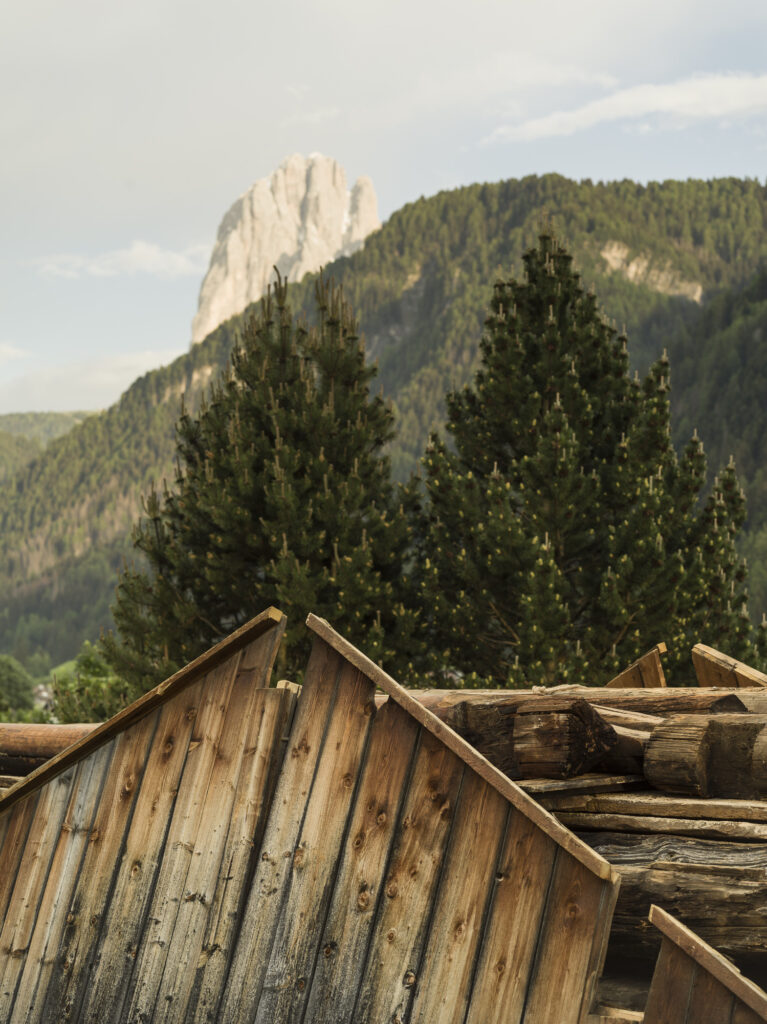
Now installed in the center of Ortisei, the cabin is not brought into original form, but instead stacked away in its own constituting components. The logs are grouped, leaning and balancing without additional fixings, in a state of in-betweenness. No more an agent of shelter, the cabin becomes part storage, part monument of the past.
The installation carries the weight of the wood and its inherent fragile qualities. Its reconfiguration unfolds as a dual gesture: through physical deconstruction, it challenges the notion of the house itself. In this state, the structure surfaces material memory and latent potential, occupying the public space, awaiting to be transformed again.
With the support of Lithuanian Culture Institute and the Embassy of Lithuania in Italy | Thanks to Chemun de Urtijëi, Monica and Hugo Moroder, Walter Wanker, Albert Lageder
Has taken part in: