Giulia Cenci
∗1988, Italy
Giulia Cenci (1988, Cortona, Italy) lives and works in Cortona.Her artistic practice is mainly expressed through sculpture and immersive installations, in which elements drawn from the animal world merge and hybridize with human or synthetic figures. In the freedom of her studio in the Tuscan countryside, Cenci personally works with metal scraps and industrial residues, integrating them with natural materials (such as ash or graphite) and casts of anatomical elements. This process leads to hybrid creations that lay the foundation for a deep connection between the artificial and the natural: “The idea of production through living beings, animals, and others - and the idea of the manufacturing of life - is often present in my research.
I associate this type of production with a neverending assembly line, where living creatures are deprived of liberty and autonomy.”
Cenci’s sculptures are often displayed in choral groups, creating immersive environments in which a collective narrative emerges — such as in the installation dead dance, 150 meters long and conceived for the 2022 Venice Biennale, or in the group of figures titled secondary forest, a High Line commission the artist made in 2024.
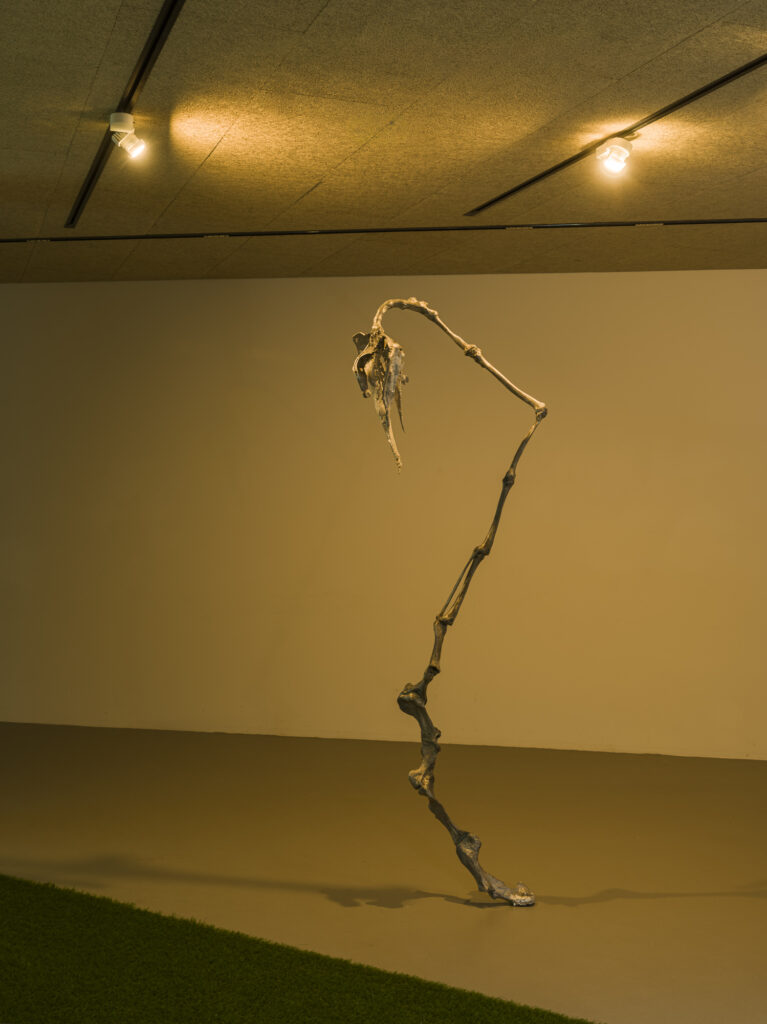
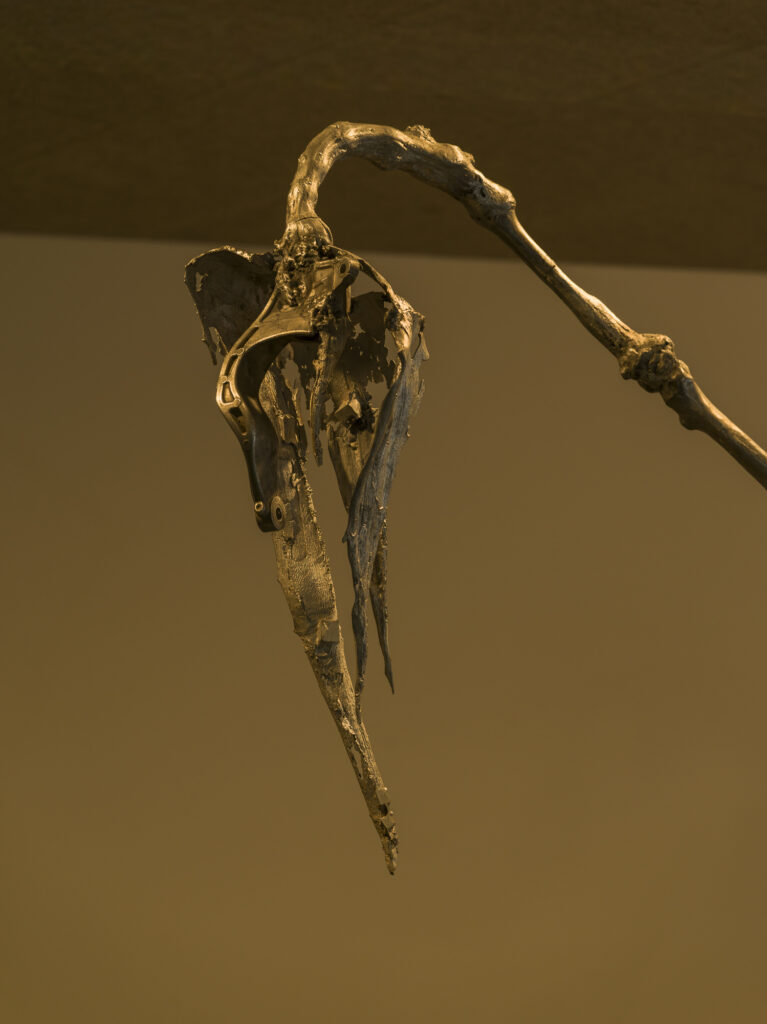
Across two distinct sites, Giulia Cenci presents sculptural bodies that seem to hover between growth and collapse. In Sala Trenker, a vertical aluminum form rises like a distorted flower, merging bones, branches, and mechanical fragments into a structure that folds back into itself. Its gesture suggests both emergence and exhaustion, as if the process of becoming were already reversing.
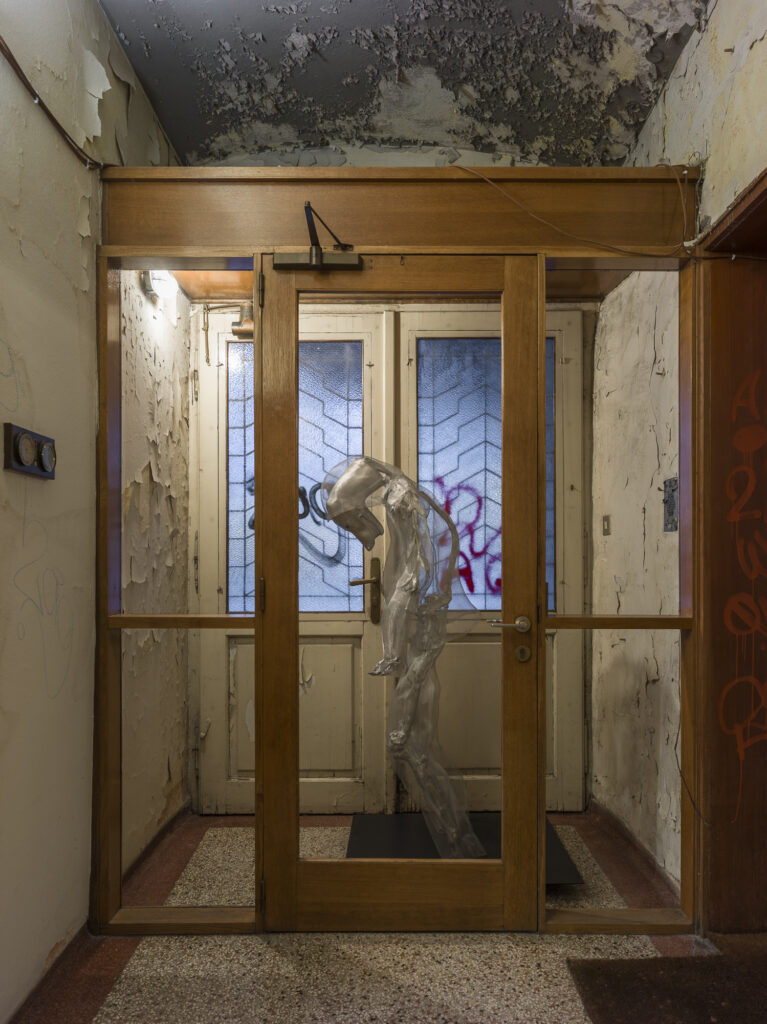
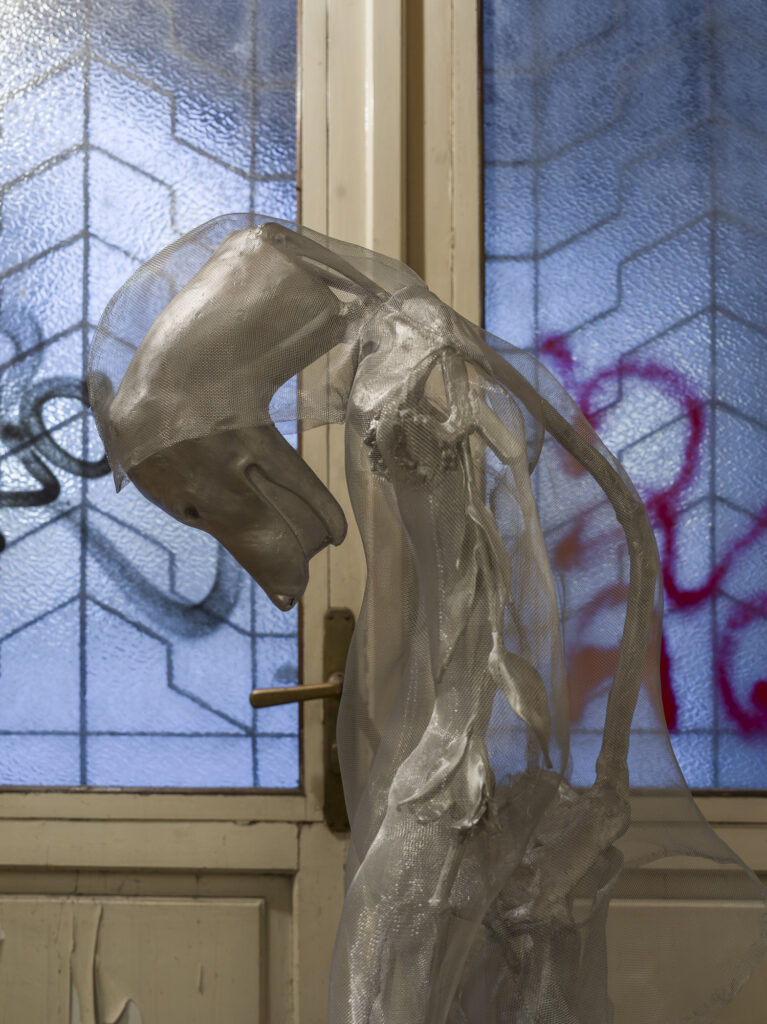
At Hotel Ladinia, the hollow men #3 occupies a narrow threshold between a functional and a sealed door. The bipedal form, crowned with a wolf’s head and composed of skeletal and vegetal elements, stands suspended in an ambiguous in-between space. Its semi-transparent surface reveals layered interiors, exposing the body as something assembled rather than whole.
Together, the works articulate a fragile coexistence of organic and industrial systems—forms that appear alive, yet remain uncertain of their own stability.
Thanks to the Krapf Family, Ernesto De Varda
Has taken part in: