Gabriela Oberkofler
∗1975, Italy
Gabriela Oberkofler (1975, Bolzano-Bozen, Italy) is an artist from South Tyrol, living in Stuttgart. In her installations made with natural elements and in her drawings — small or large in scale, on paper or on walls — the artist highlights the role that nature plays in today’s world.In her colorful and richly detailed drawings, composed of lines and forms, Oberkofler emphasizes the vitality of plant and animal species and their interconnection with human existence. The network of flowers, roots, branches, and leaves that intertwine in her installations and drawings, as well as the seed archives that the artist carefully preserves, reveal a fascination with the richness, diversity, and resilience of natural ecosystems.
Oberkofler reflects on the loss of natural resources and shows how this loss is connected to the disappearance of livable and cultural spaces: “My aim is to show that something is missing.” In Flaas, in the mountains near Bolzano, the artist has opened to the public her family farm, the Taberhof. She has renamed it the Institute for Alternative Agriculture, Contemporary Art, and Life in the Periphery, hosting exhibitions and artistic projects.
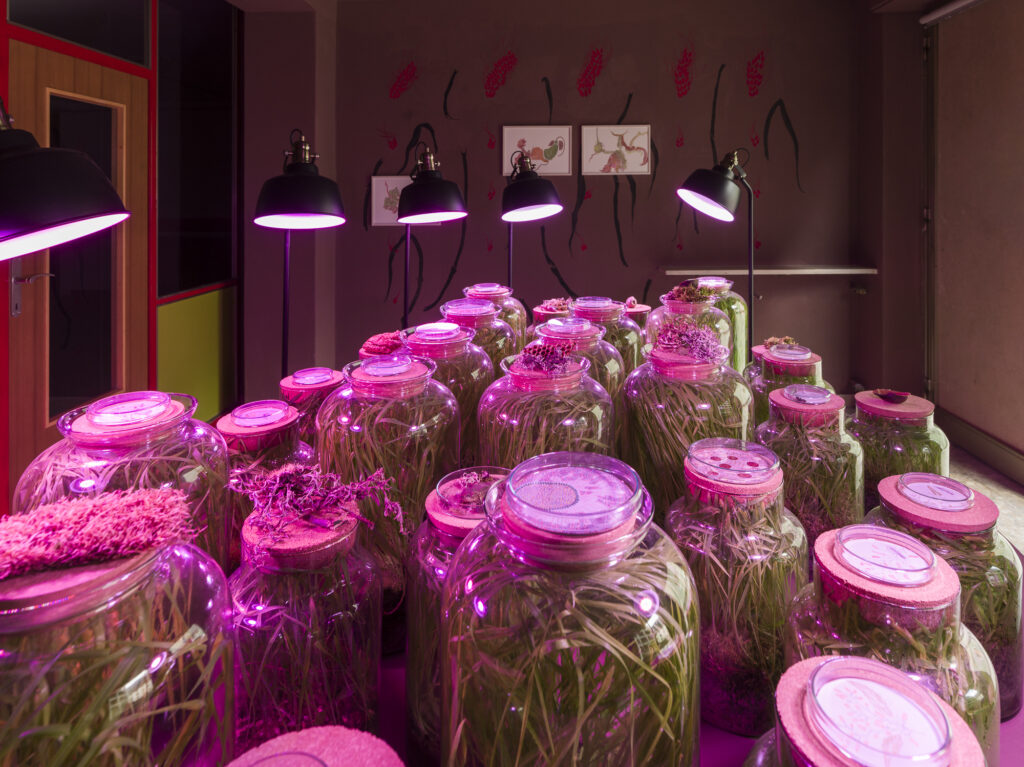
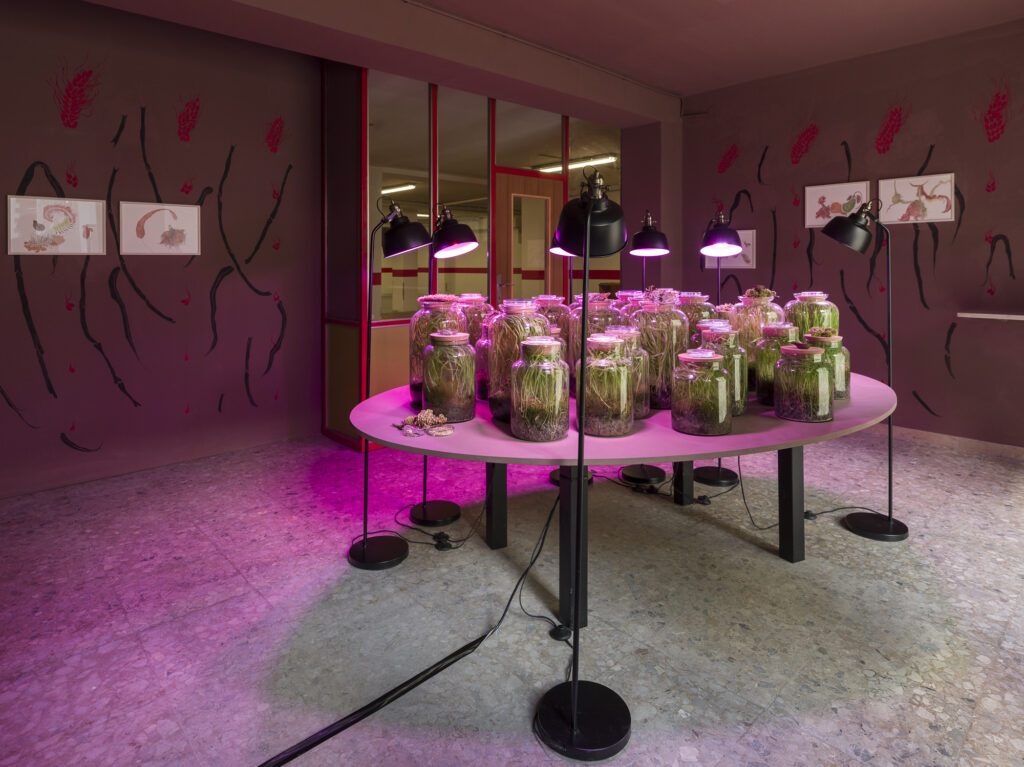
In a vacant shop near Ortisei’s pedestrian area, Oberkofler constructs a space suspended between laboratory and plant nursery. Inspired by the story of the valley’s “last field”—a symbol of the shift from agriculture to tourism—the installation gathers fragments of this disappearing landscape and repositions them within a controlled interior environment.
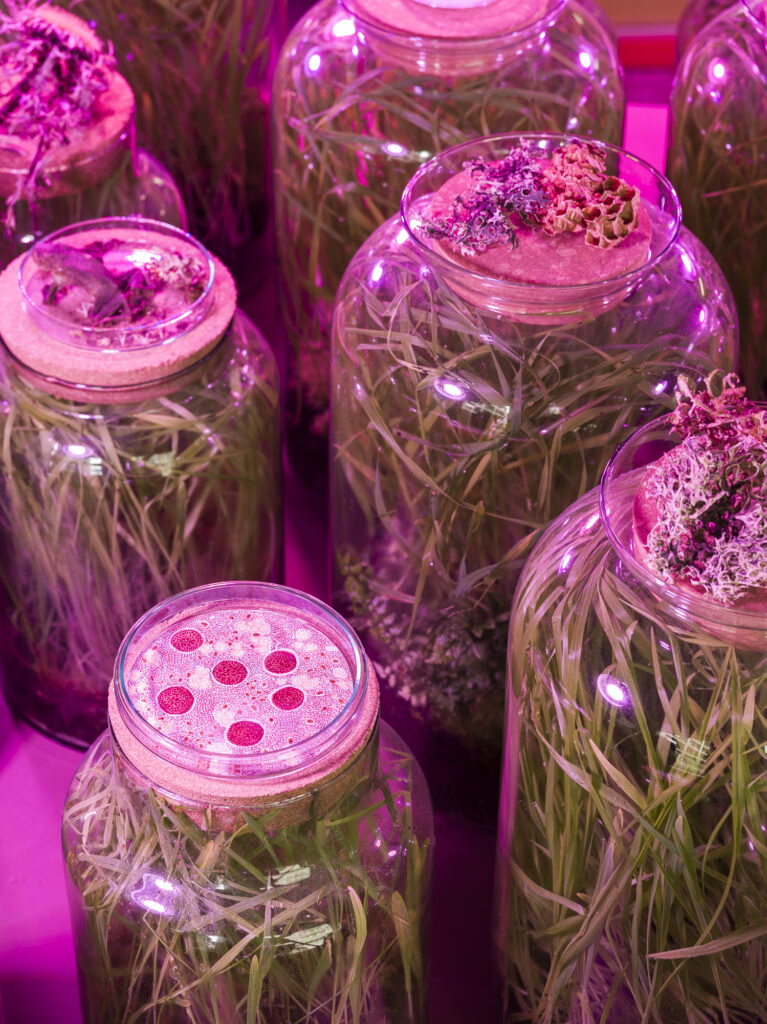
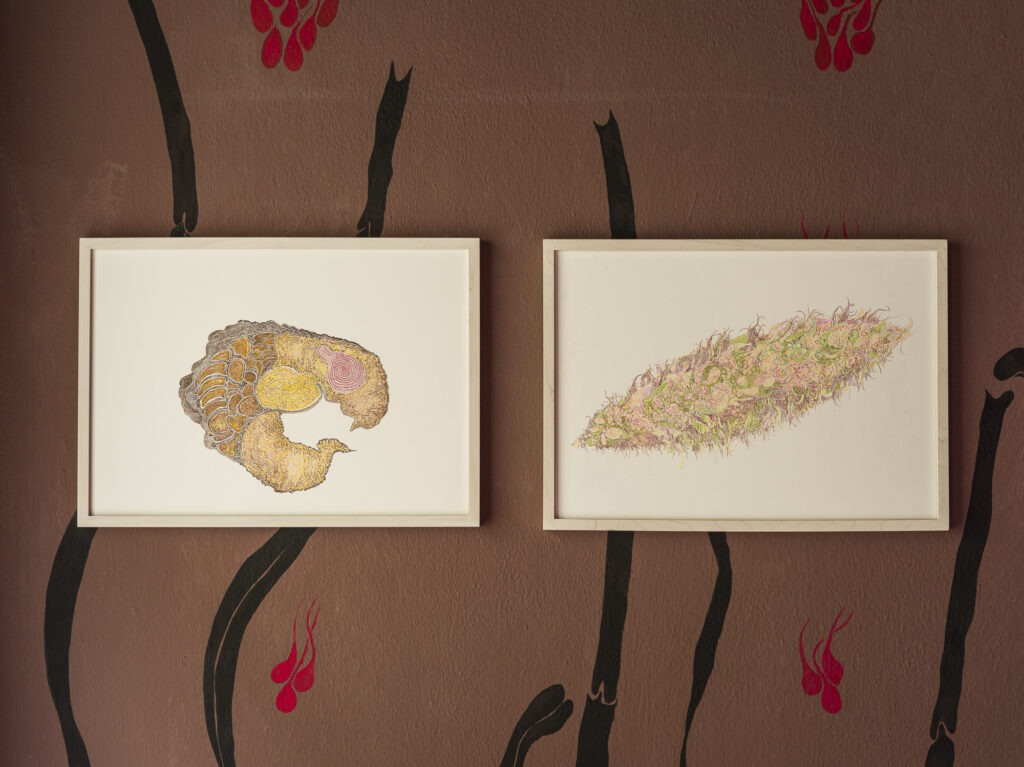
Plants sourced from the former farmland are cultivated in glass containers, sustained by infrared light, as if held in a state of artificial preservation. Around them, intricate ink-pen drawings spread across walls and ceiling, dissecting and reassembling vegetal forms into delicate, expansive networks, linked to the Pitores of the Valley of Fassa. The drawn and the living begin to merge, collapsing distinctions between observation and growth.
Oberkofler’s intervention stages a quiet tension between care and control, cultivation and loss—transforming the shop into a speculative site where memory, ecology, and the future of the valley’s landscape are held in fragile suspension.
Thanks to the Moroder Family, Hotel Maria, Decor, Keim Colors
Has taken part in: