Pedro Abu Wirz & Michael Marder
∗1981, Brazil/Switzerland, 1980, Canada/Portugal
Pedro Abu Wirz (1981, Pindamonhangaba, Brazil) is a Swiss-Brazilian artist currently living in Zurich. Michael Marder (1980, Moscow, Russia) is Ikerbasque Research Professor of Philosophy at the University of the Basque Country (EHU), Vitoria-Gasteiz.Wirz’s joyful artistic practice is primarily sculptural and installation-based, employing a wide range of materials—from those traditionally associated with art, to scrap materials from his studio, to organic matter such as beeswax, earth, or elements of animal origin. Raised in Brazil by an agronomist and a biologist, Wirz reflects on the world around us by analyzing its ecological, colonial, extractive, and social mechanisms—in an organic fusion of science and the supernatural.
Marder is a philosopher and the author of numerous publications, best known for his studies on the philosophy of plants and for the concept of “plant-thinking.” As Marder states: “Art is an articulation: it articulates the articulations of the world and also the nothing, the void, breathing at the heart of each articulation. I do not mean to reduce all art to an onomatopoeic, or, more broadly, mimetic endeavor. Rather, the world is already a complex articulation; it is already an art, while what we call art lets it reach us and touch us otherwise.” The work created by Wirz and Marder for Biennale Gherdëina marks the first collaboration between the two.
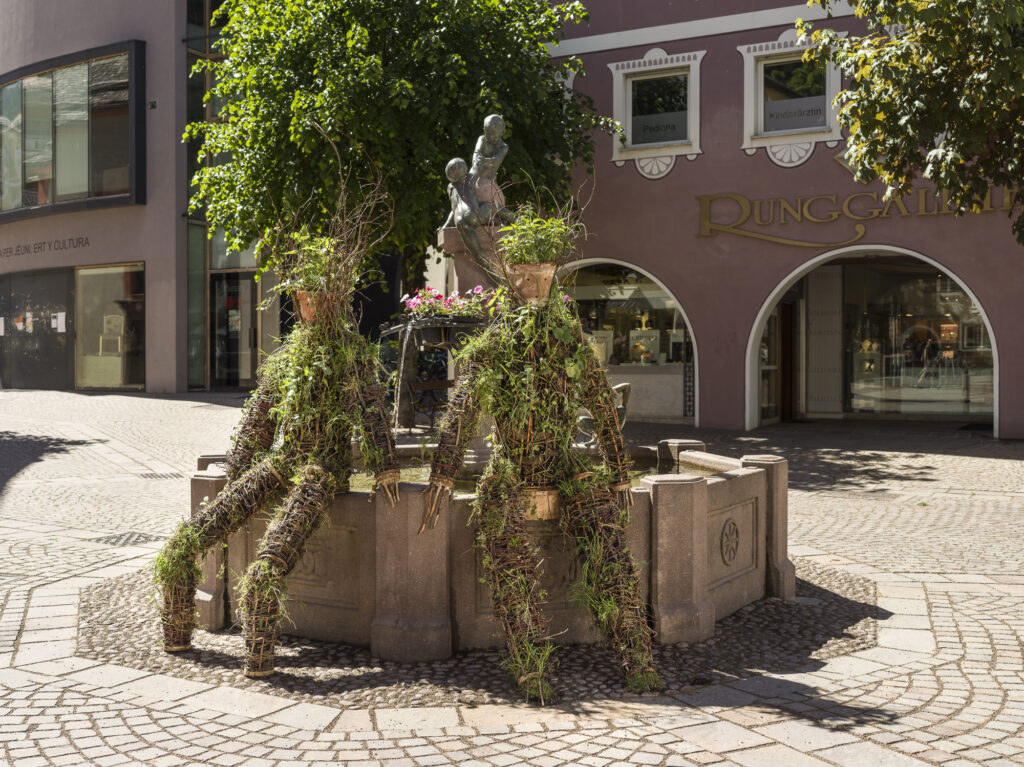
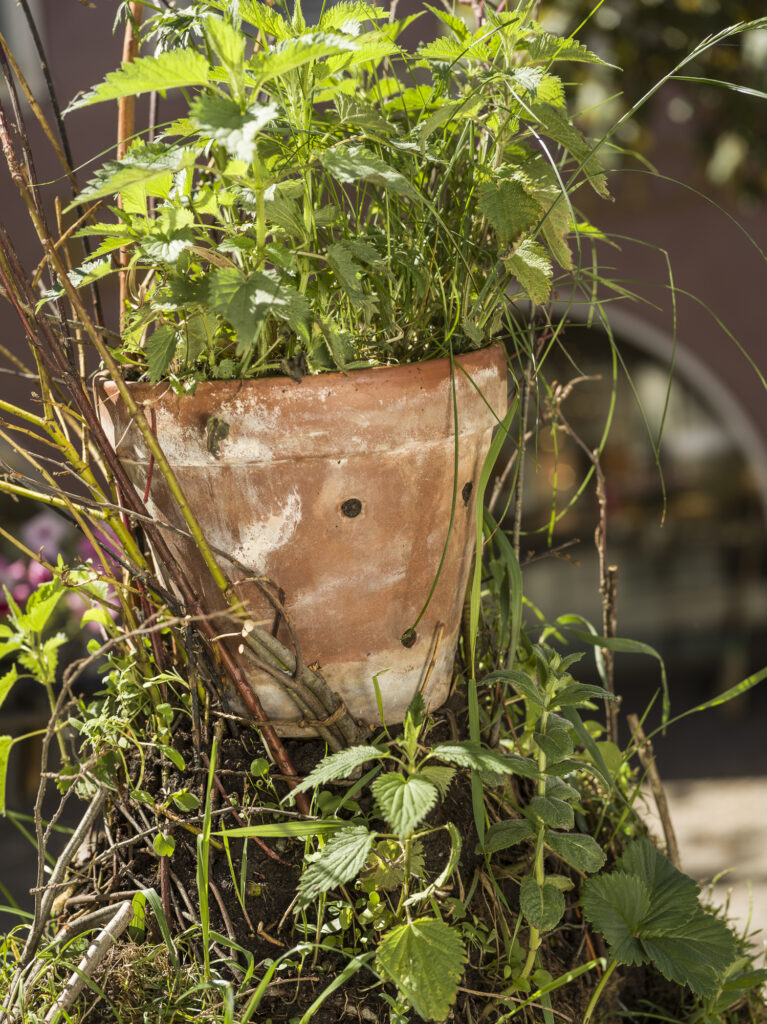
At the central fountain, Wirz and Marder present two fragile, humanoid figures assembled from branches, twigs, soil and living plant matter. The figures, sitting around the water source—observing the visitors, at once celebratory and unstable.
These “garden bodies” evoke a process rather than a fixed image: growth, decay, and transformation unfolding simultaneously. Their materials are not inert but subject to change, gradually drying, decomposing, and returning to the surrounding environment. In this sense, the figures do not represent life; they participate in it.
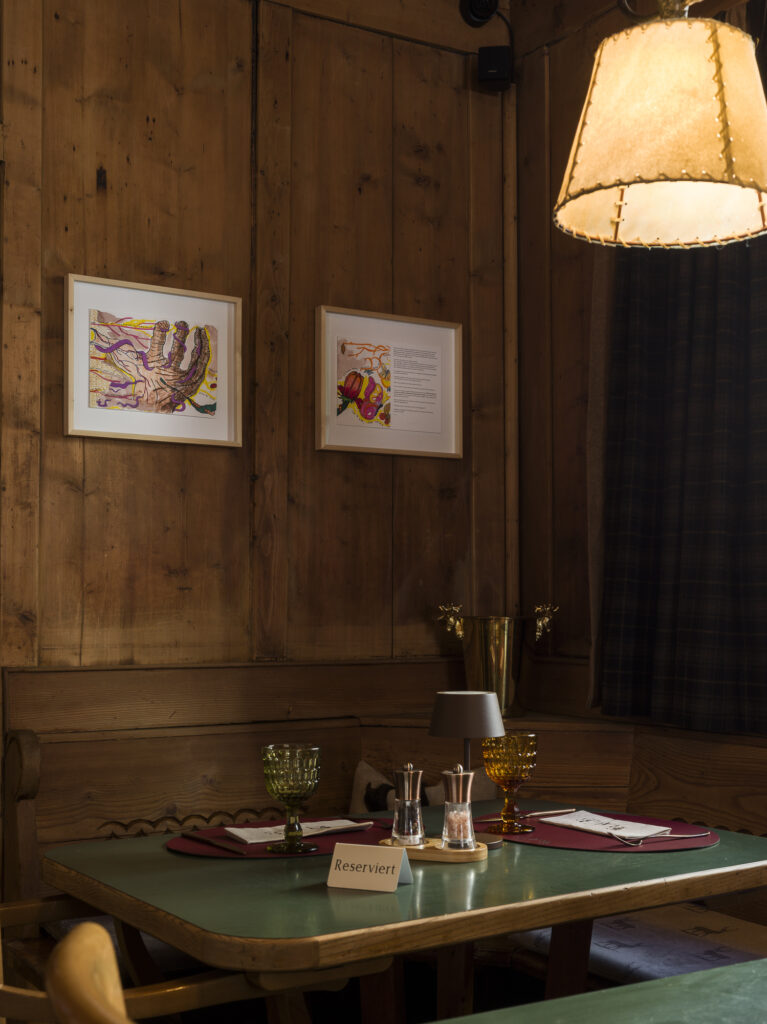
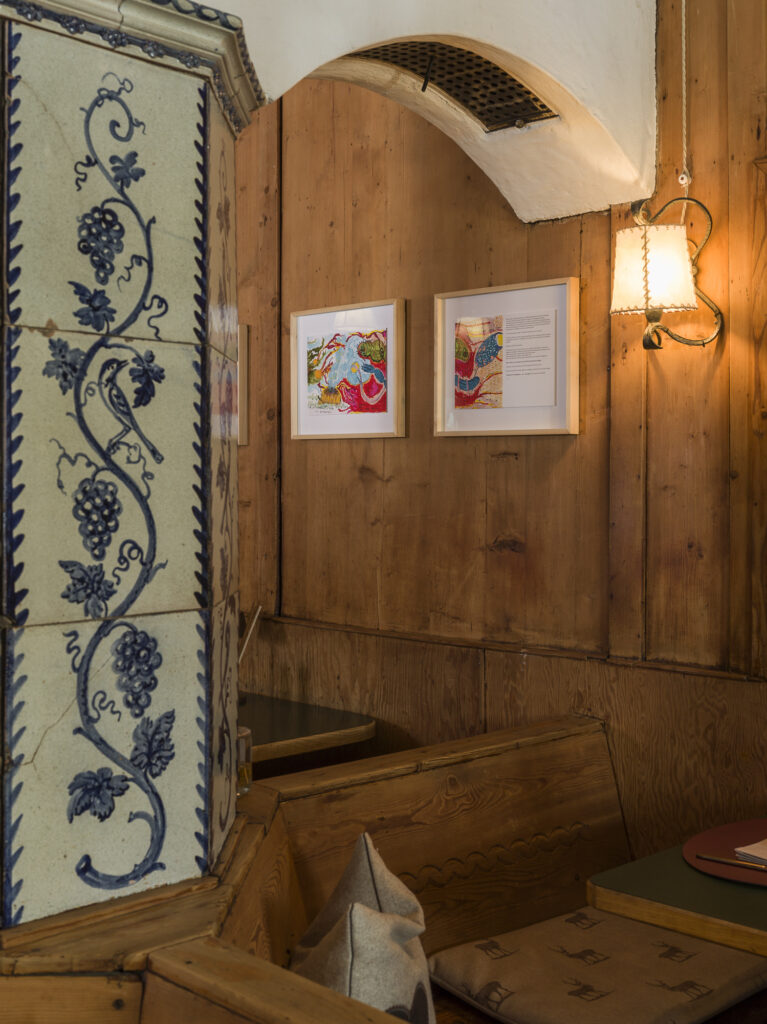
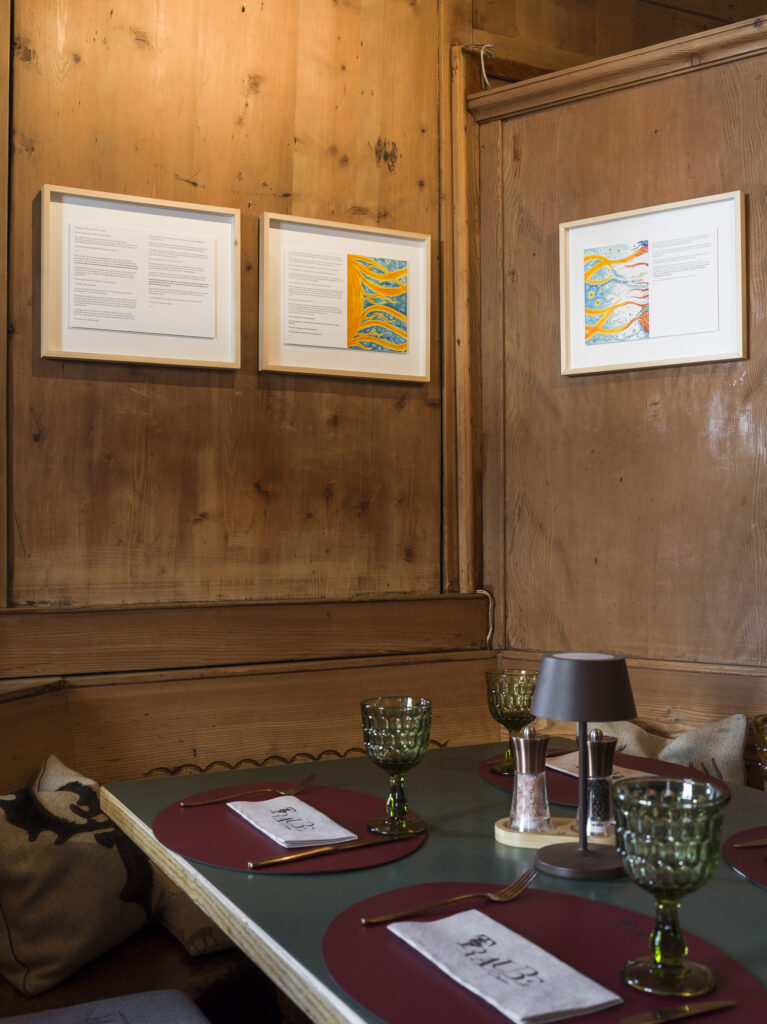
The project emerges from a shared interest in decomposition as a generative force. Marder wrote a children story, titled The Apple that Dreamt of Soil: A Story of De-------Composition, in which, rather than marking an end, decay becomes a condition for recomposition, where matter reorganises itself into new forms. Extending this dialogue, Wirz’s drawings—developed in response to Marder’s writing—trace parallel cycles of transformation, linking sculpture, image, and thought into an open, evolving ecosystem. Both the story and the drawings are on display at the Osteria Traube Wirtshaus, a restaurant facing the square where the fountain is located.
Wirz and Marder will also lead a workshop for children and adolescents using drawing as the primary methodology to reflect on the matter and the ways in which we are composed—both literally and metaphorically.
With the support of the Swiss Arts Council Pro Helvetia. | Thanks to Chemun de Urtijëi, Arnold Holzknecht. | Thanks to Osteria Traube Wirtshaus.
Has taken part in: