Walter Niedermayr
∗1952, Italy
Walter Niedermayr (1952, Bozen-Bolzano, Italy) lives and works in South Tyrol. Considered one of the most important contemporary Italian photographers, his artistic vision engages in a unique way with space, whether architectural or landscape. Space is understood as a place occupied by man, and as such it brings to light patterns of life, narratives, and stories unfolding within it.Alpine regions and urban structures, architectures and industries, as well as prisons and hospitals and their associated patterns of life are constant themes and locations for his artistic engagements. “There is a relationship between what we photograph and reality, but what the image tells us is yet another reality. It is a transformation of the visible. I have always been interested in the relationship between the reality of space and the reality of the image.”
Alongside his photographic production, Niedermayr also creates video works. While his photographs emphasize a potential sense of dynamism, most of his videos are static, shot with a fixed camera, intending so to capture the dynamic of the action.
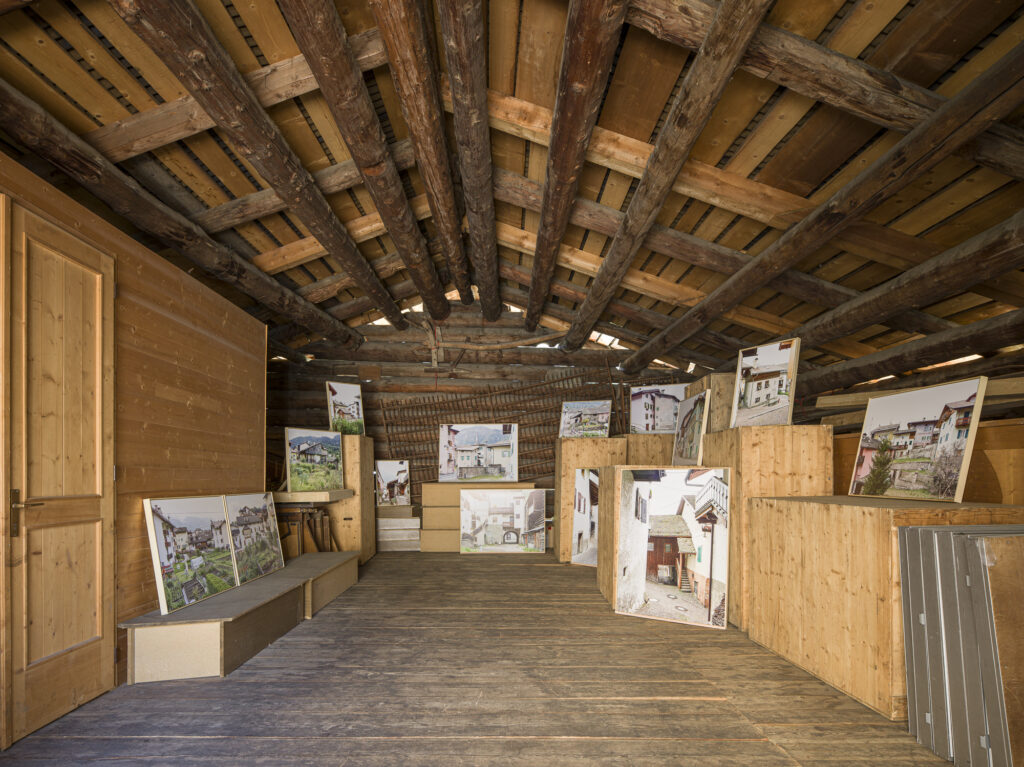
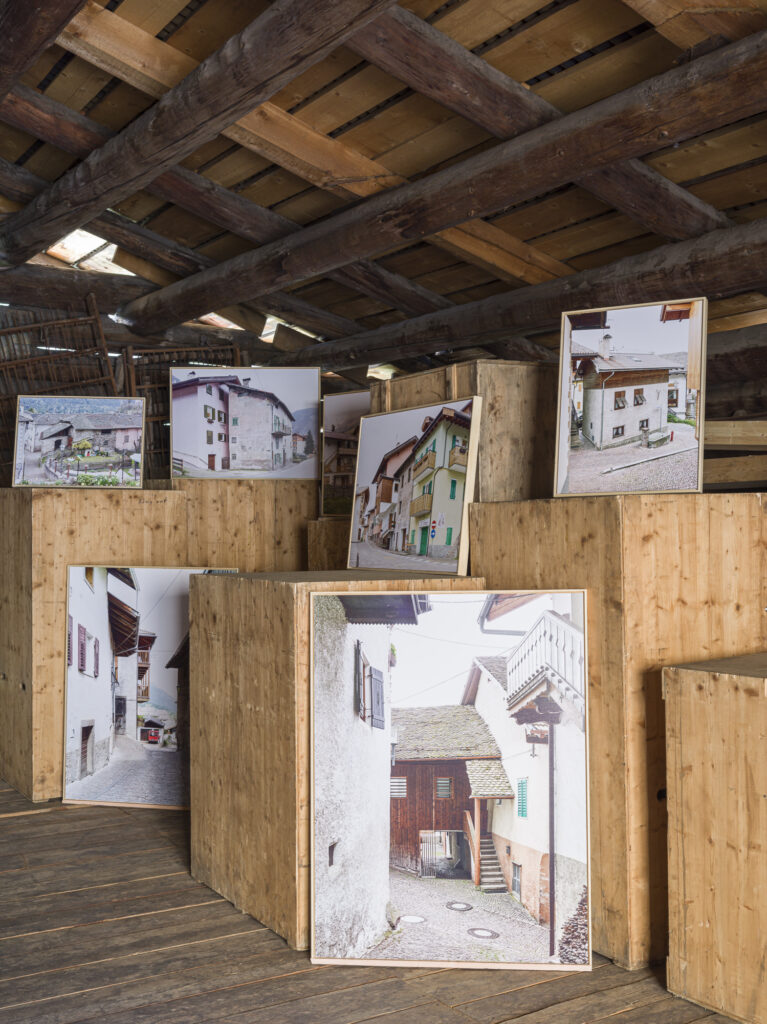
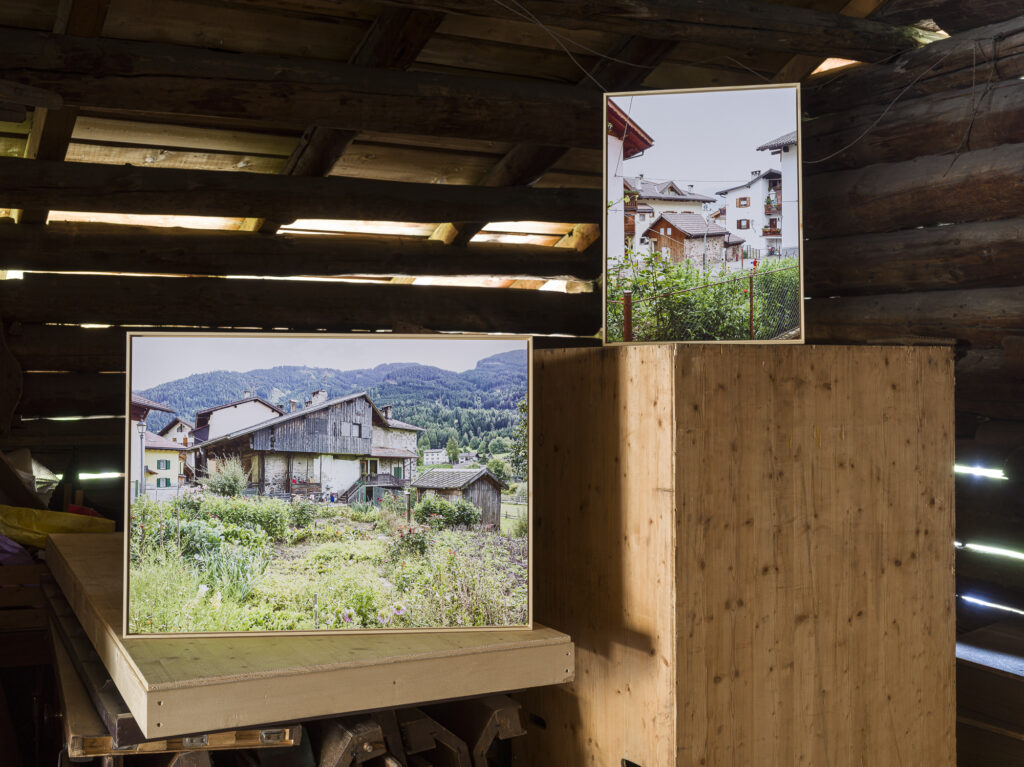
Niedermayr’s works are presented across two sites. In a former agricultural barn in St. Cristina, his ongoing photographic project Koexistenzen is installed as a deliberately open and non-hierarchical arrangement. Photographs lean against walls, hang at varying heights, or occupy transitional positions within the space, resisting the fixity of a conventional exhibition display. This spatial strategy mirrors the subject of the work itself: the historical and contemporary realities of Alpine communities shaped by shared ownership and collective governance. Across the Fiemme Valley and surrounding regions, where Italian, German, and Ladin cultures intersect, the notion of the “commons” emerges not as an idealized model, but as a lived and negotiated condition—one that produces both continuity and tension.
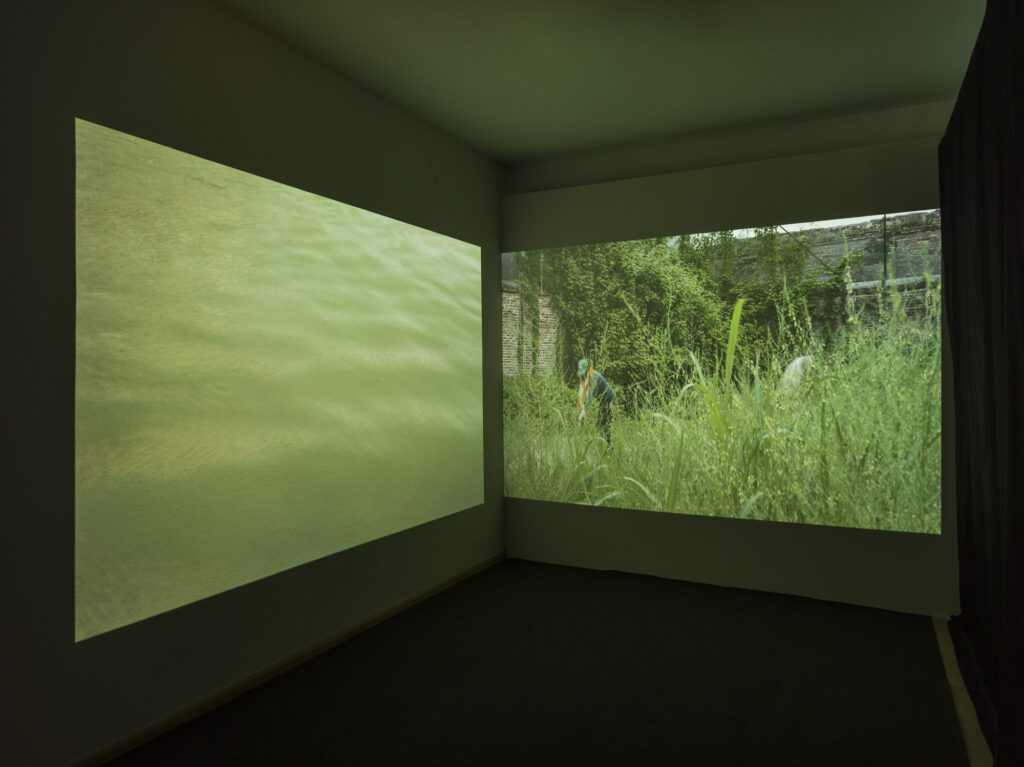
The second work, presented at the Museum Gherdëina, extends this inquiry into a markedly different context. In collaboration with Marina Ballo Charmet, Niedermayr developed Casanza (2022), a two-channel video installation filmed within the women’s prison on the island of Giudecca in Venice. At its centre is a large cultivated garden maintained by inmates alongside cooperative workers and volunteers. The camera adopts a restrained, observational position, allowing daily routines—planting, tending, moving through space—to unfold without narrative imposition. What does it mean for women to be detained in a facility shaped by spaces for movement, creativity, openness, working with nature and the land, communication, and much more? Through their relationship with nature — through caring for and cultivating it — can incarcerated women create moments of possibility and openings beyond the conditions of confinement?
Thanks to Union di Ladins de Gherdëina, Museum Gherdëina, Südtirol Böden. | Thanks to Pluania de Santa Cristina, Sen. Raimund Perathoner.
Has taken part in: