Gregor Prugger & Leonora Prugger
∗1954, Italy, 1995, Italy
lives and works in Ortisei, Italy Nürnberg, Germany
Gregor Prugger (1954, Ortisei, Italy) and Leonora Prugger (1995, Bozen-Bolzano, Italy) are two artists from Val Gardena. Gregor Prugger still lives in the valley, at his family farmstead called Pilat, just above Ortisei, which he has transformed into an artist’s studio. Leonora Prugger, his daughter, has been living in Nuremberg, Germany for several years. The Ladin identity of both artists is tangibly visible in their work. Gregor Prugger represents one of the most significant contemporary artistic positions among the sculptors of Val Gardena; wood is the primary material in his practice, treated as a living and malleable element, given forms and volumes that echo the organic nature and history of wood itself. For several years, Leonora Prugger has been developing — mainly through painting — a reflection on the concept of endemism: how endemic species do not only represent identity and rootedness in a place or community, but also how they tell the story of a long process of adaptation to extreme conditions. As the artist herself states: “In times when ecological and cultural systems are equally threatened, nature becomes a place of resistance and renewal — a garden in which knowledge, tradition, and language are preserved.”
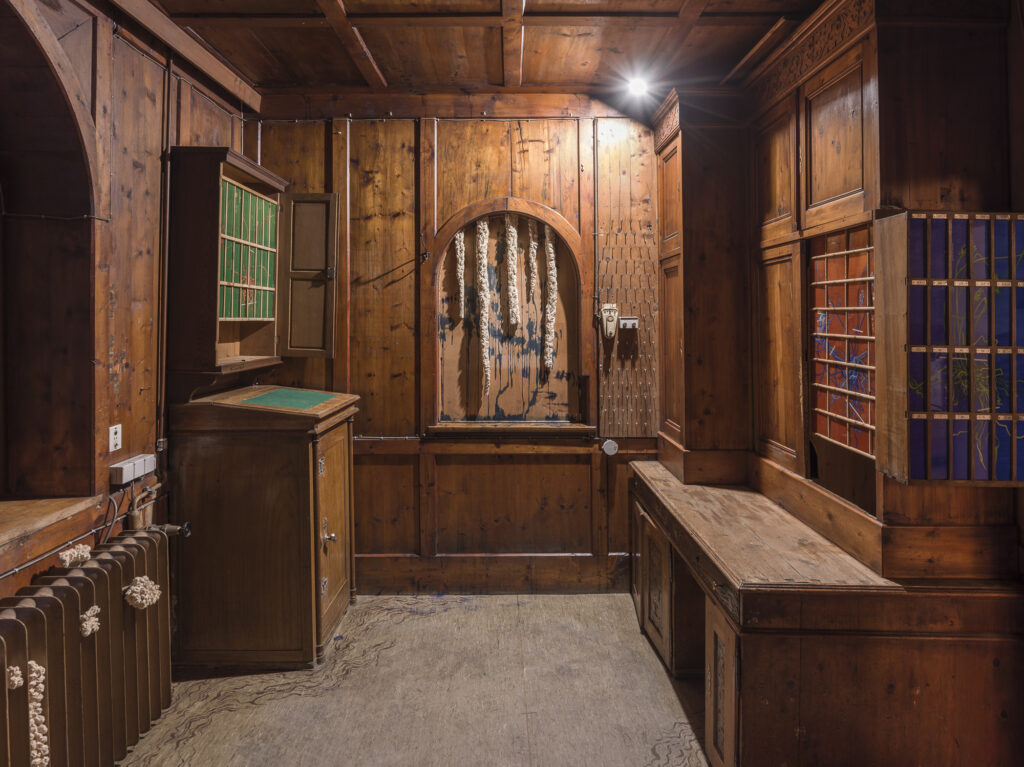
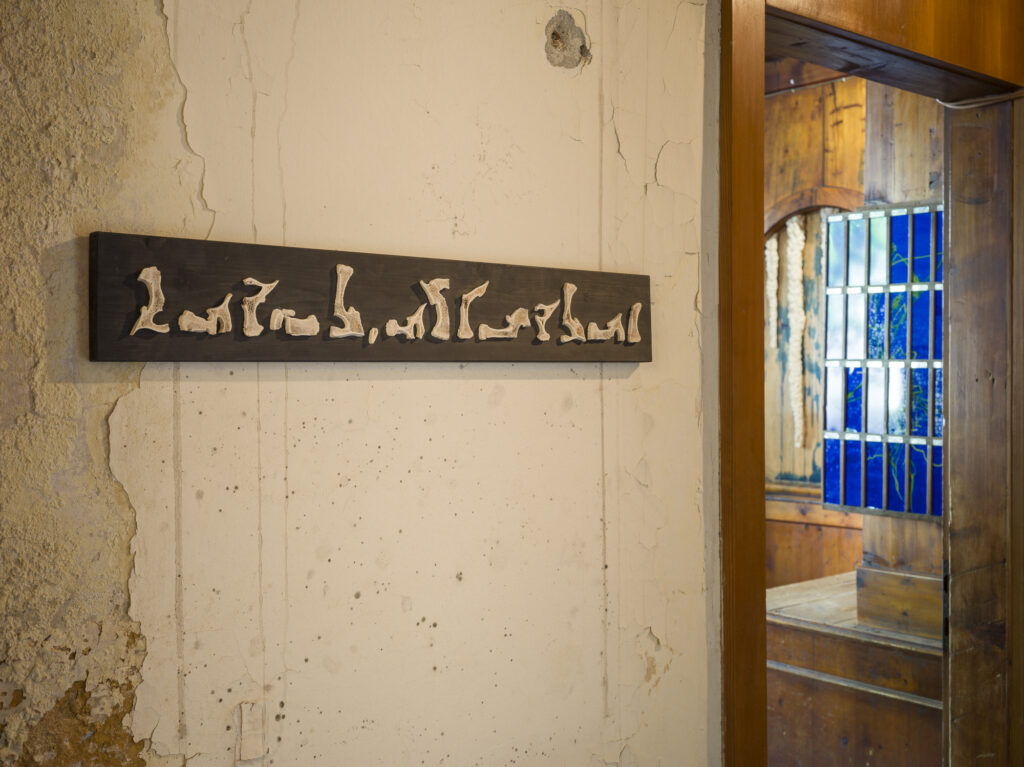
In the old reception space of Hotel Ladinia, Gregor and Leonora Prugger transform a place of orientation into a site of quiet destabilisation. Conceived as a reflection of the Dolomites as a cultural landscape, the intervention begins from systems that organise and describe the world—mapping, taxonomy, architecture, language—and gently unsettles them from within.
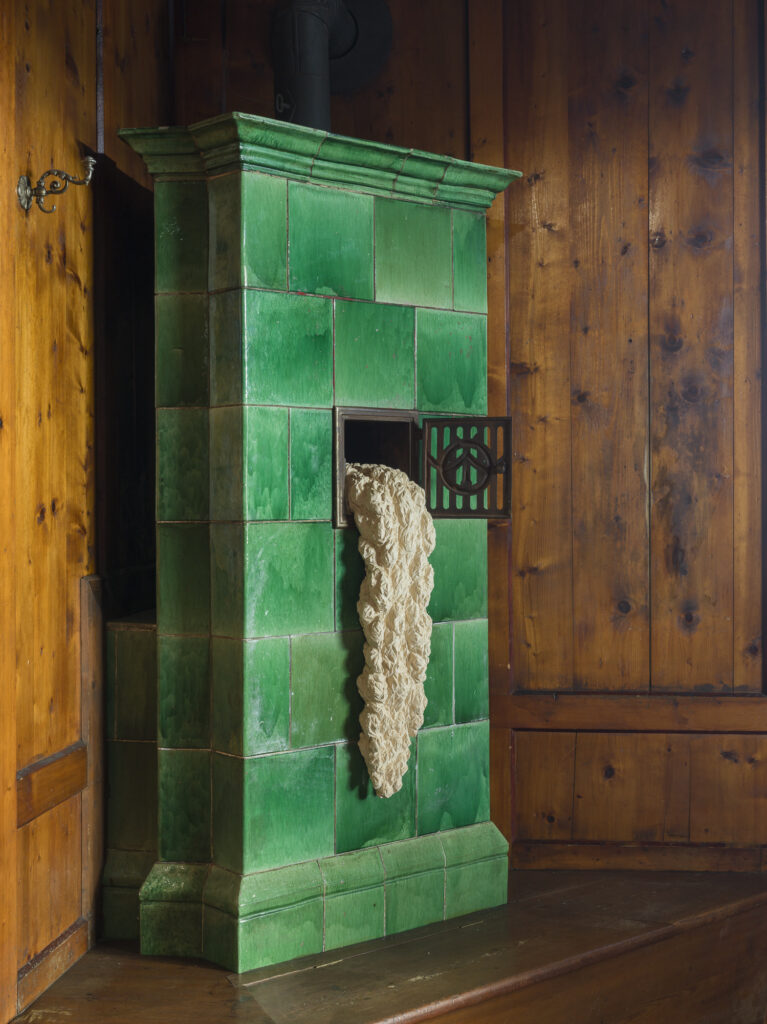
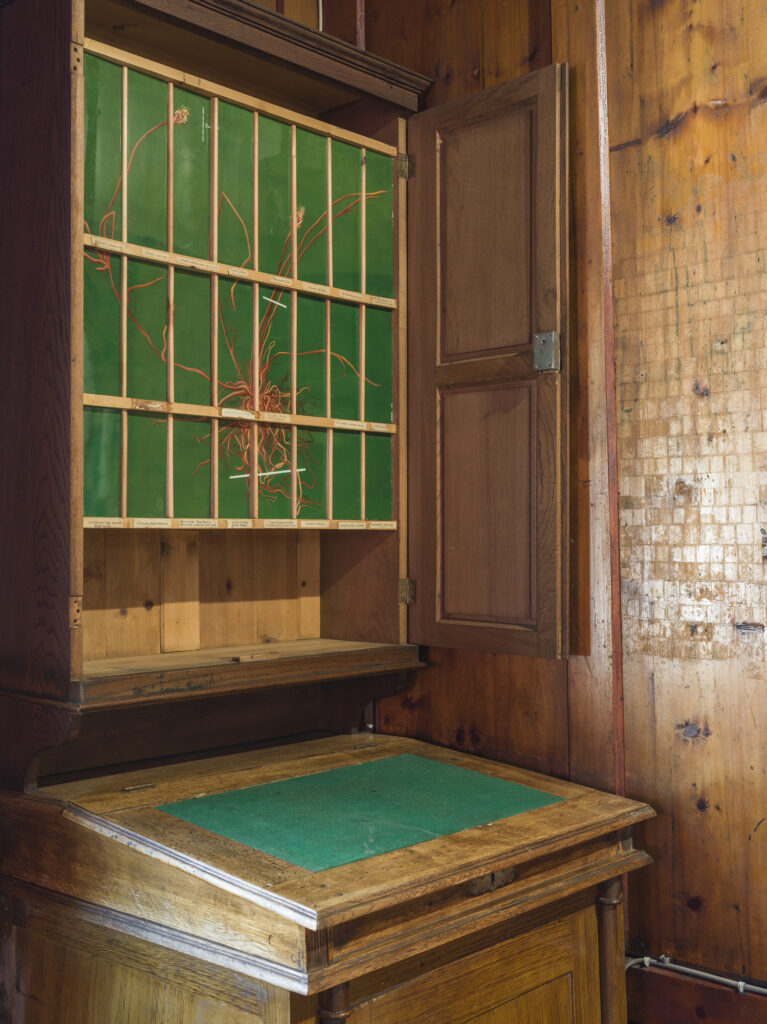
Existing elements such as radiators, fireplaces, and key racks become points of departure for sculptural and painterly gestures that interrupt their apparent stability. Gregor Prugger’s intuitive engagement with wood and found natural forms meets Leonora Prugger’s fluid, semi-figurative painting, where plants, memories, and shifting identities emerge and dissolve.
Together, their first collaboration unfolds as a dialogue between generations, materials, and ways of seeing. What appears ordered reveals itself as contingent: a landscape—and a system—always in the process of becoming.
Thanks to the Krapf Family, Ernesto De Varda
Has taken part in: