Bas Smets + Eliane Le Roux
∗1975, Belgium, 1983, France
Bas Smets (1975, Hasselt, Belgium) lives and works between Brussels and Paris. He is the founder of the landscape architecture studio Bureau Bas Smets and Professor in Practice at the Harvard Graduate School of Design. His work ranges from large public parks to historic city centres, from infrastructural landscapes to film sets. He is known for developing new urban ecologies in which vegetation, soil, and water generate microclimates that increase the resilience of the built environment to climate change. Collaborations with researchers and artists are at the core of his practice. Recent projects include the LUMA Parc des Ateliers in Arles, the public spaces around Notre-Dame Cathedral in Paris, currently under construction, and Building Biospheres for the Belgian Pavilion at the 2025 Venice Architecture Biennale, developed with neurobiologist Stefano Mancuso.Eliane Le Roux (1983, Boulogne-Billancourt, France) is an Art Director. Her practice focuses on immersive spatial installations that combine scenographic and architectural elements through the use of natural materials. She was a set designer for fashion shows for seven years and has been the Art Director at Bureau Bas Smets since 2008. She was selected for the Hermès Académie des savoir-faire and recently refurbished a room at the Villa Medici in Rome.
“As a landscape architect, I seek to transform the ‘land’, the existing condition, into a ‘landscape’, an organisation of the natural elements that is beneficial to all forms of life. Each project constructs a new equilibrium. The dialogue with science and art is essential to this process. Together with my partner Eliane Le Roux, we have built a shared field of references from which these landscapes emerge.”
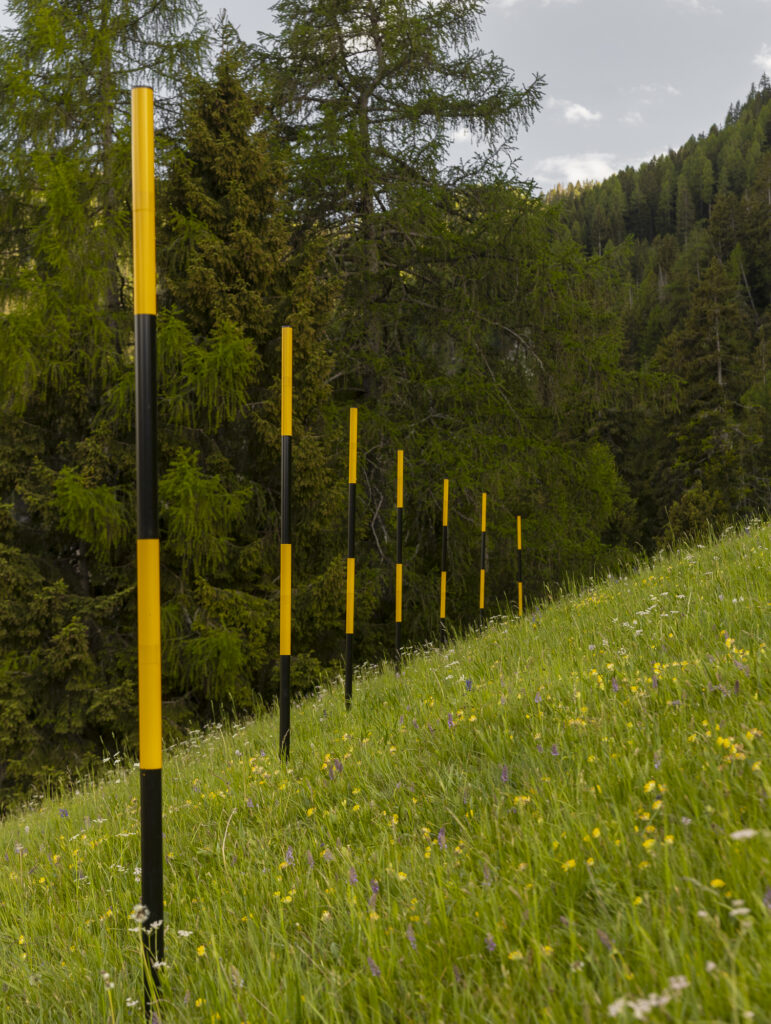
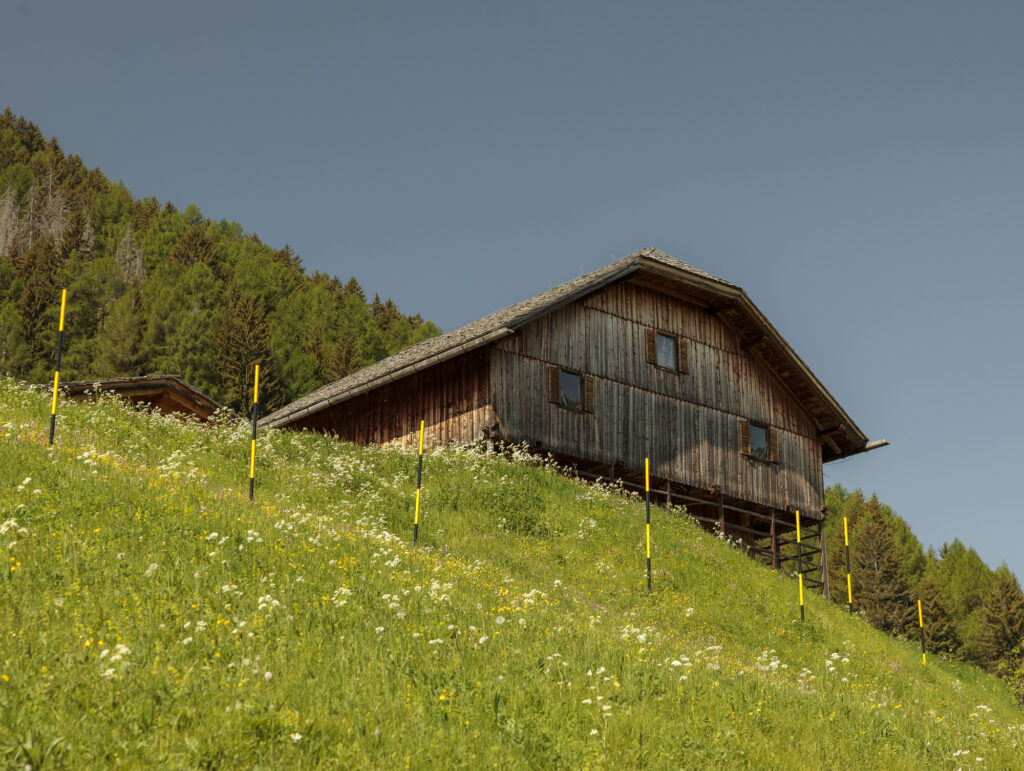
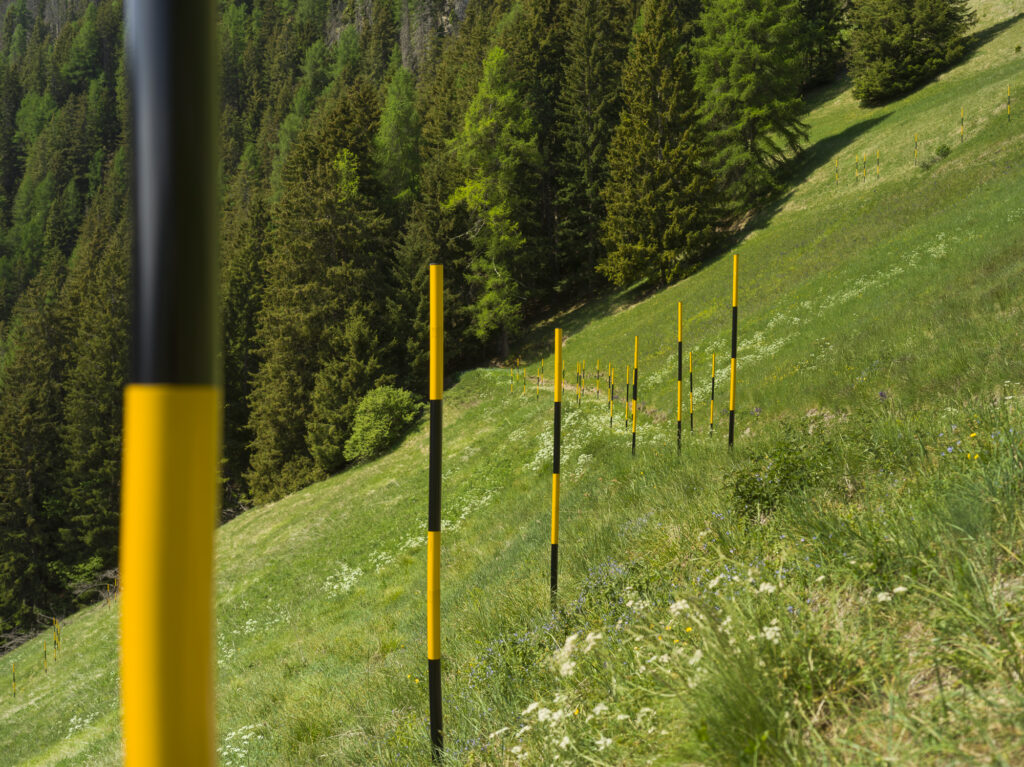
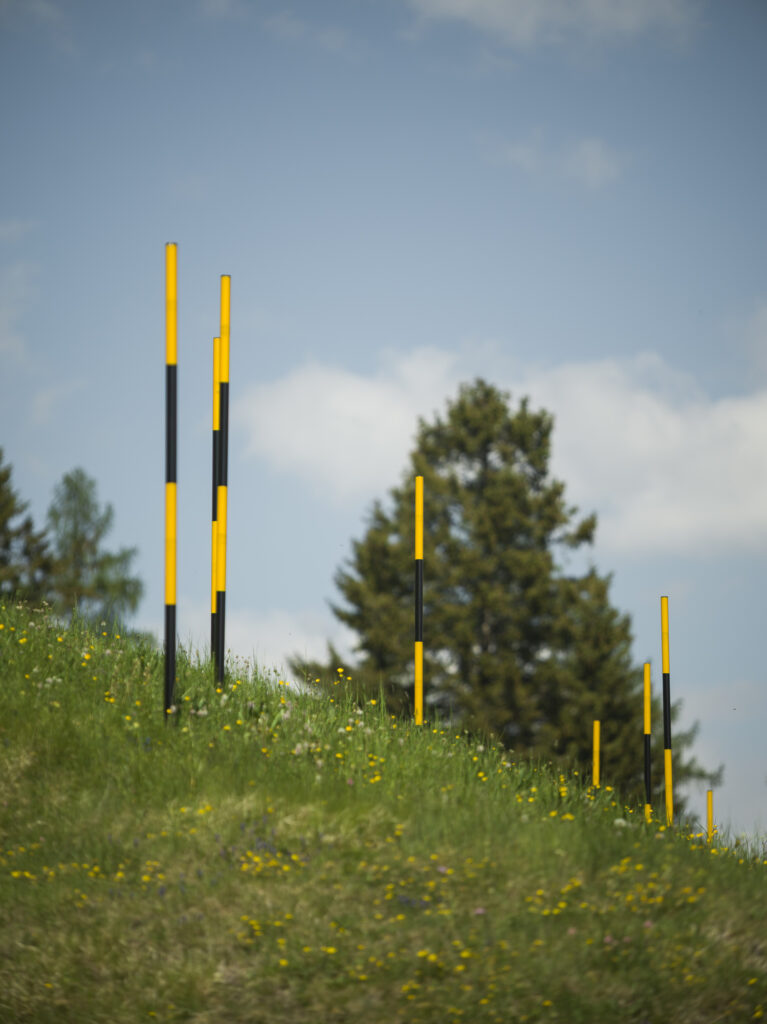
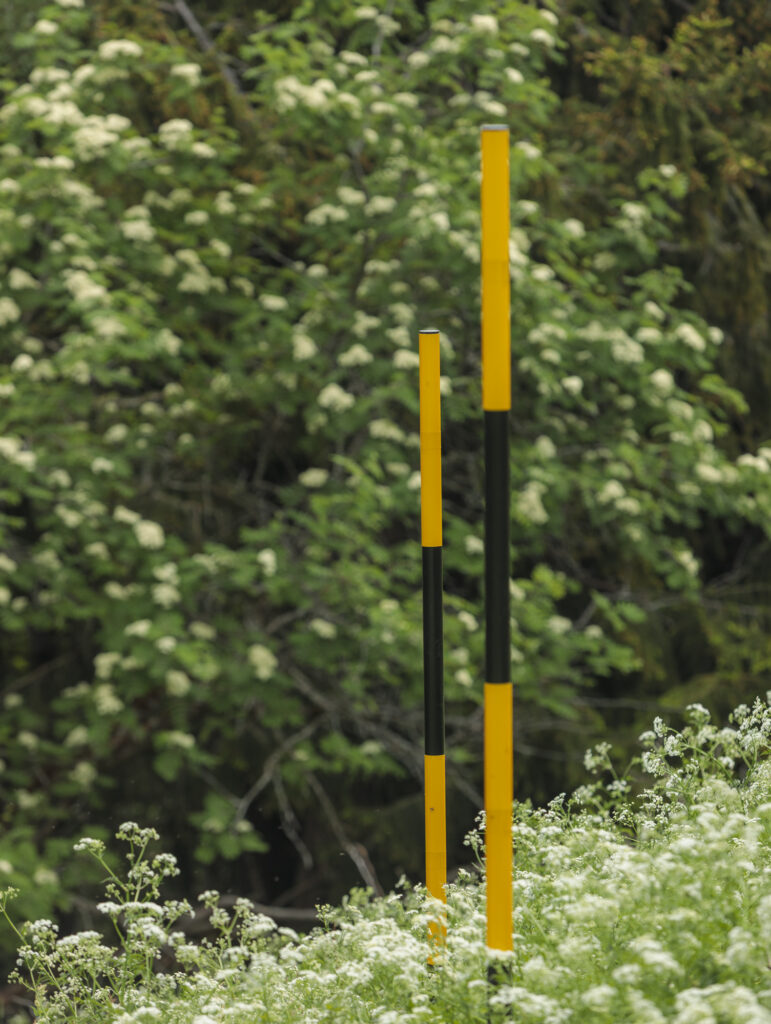
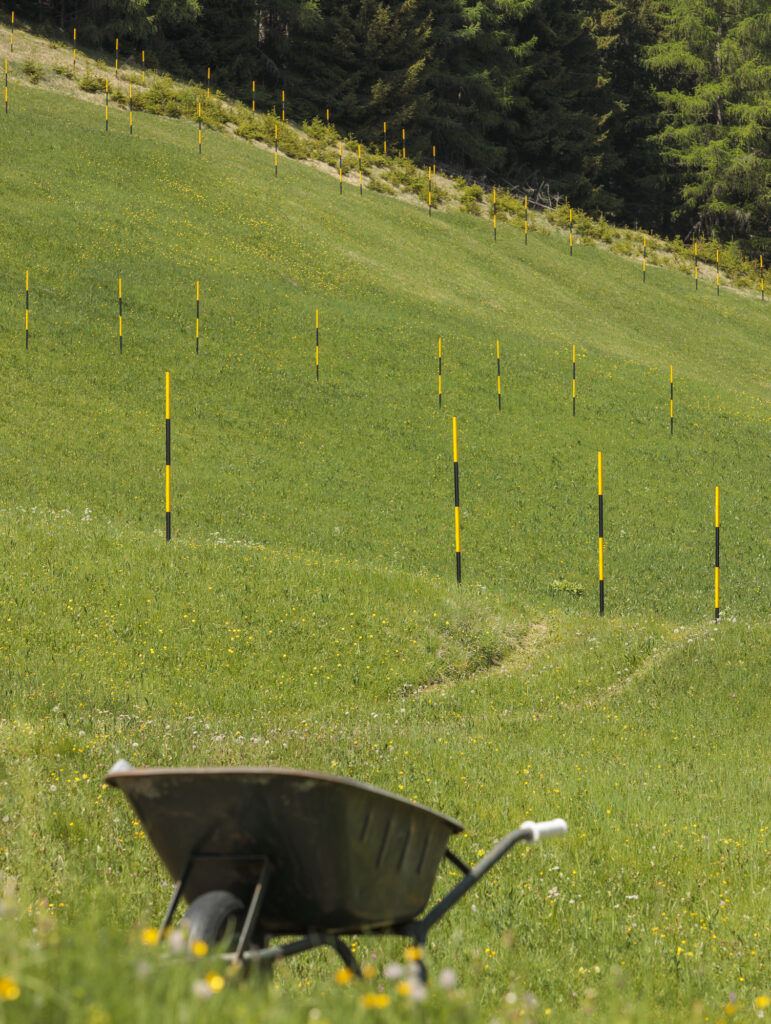
High above Ortisei, on Maso Pilat, Smets and Le Roux inscribe a subtle yet precise intervention into the alpine landscape. What appears at first as a gentle green meadow reveals itself as a mapping of climate change. At 15-meter altitude interval, three hundred snow depth stakes trace horizontal lines, each corresponding to the gradual rise of the freezing line over recent decades.
These snow stakes, used in winter to indicate the amount of snow, now mark the year at which the snow was last seen at that altitude. Temperature is translated into elevation, atmosphere into form. The work does not impose itself upon the land but emerges from it, allowing the mountain to narrate its own transformation.
In this minimal gesture, the landscape becomes both image and evidence, a quiet but undeniable register of change, where beauty and urgency converge in a shared horizon.
With the support of Nuovi Mecenati - Fondazione franco- italiana di sostegno alla creazione contemporanea
Has taken part in: