Kelly Tissot
∗1995, France
Kelly Tissot (1995, Annecy, France) lives and works in Basel. Focusing mainly on black-and-white photography displayed often in and around wooden and metal (support-) structures, her images present a stark, raw, and sparse vision of rural contexts. Raised in the mountains of Haute-Savoie, in her photographs Tissot captures uncompromising details of places and objects, exploring her subjects in an almost merciless way. Goats, horses, and dogs — portrayed in their stables — are interwoven with images of piles of scrap metal, grease-stained motorcycles, and agricultural machinery. As Tissot states, “My artistic project explores the antagonisms and harmonies that emerge at the heart of a once-wild nature, now rendered synthetic, while highlighting its resilience in conveying its own mythologies and its imaginative power.”In Tissot’s photographs, the human figure is never directly present, but appears through the traces it leaves in the environment it inhabits and shapes. The images are presented in oversized formats and tight close-ups, producing a strikingly disenchanted effect. At times, within the exhibition space, the artist also installs sculptural devices, made-of wood or metal, that limit or influence the way the images are viewed, transforming the photographic encounter into a spatial experience.
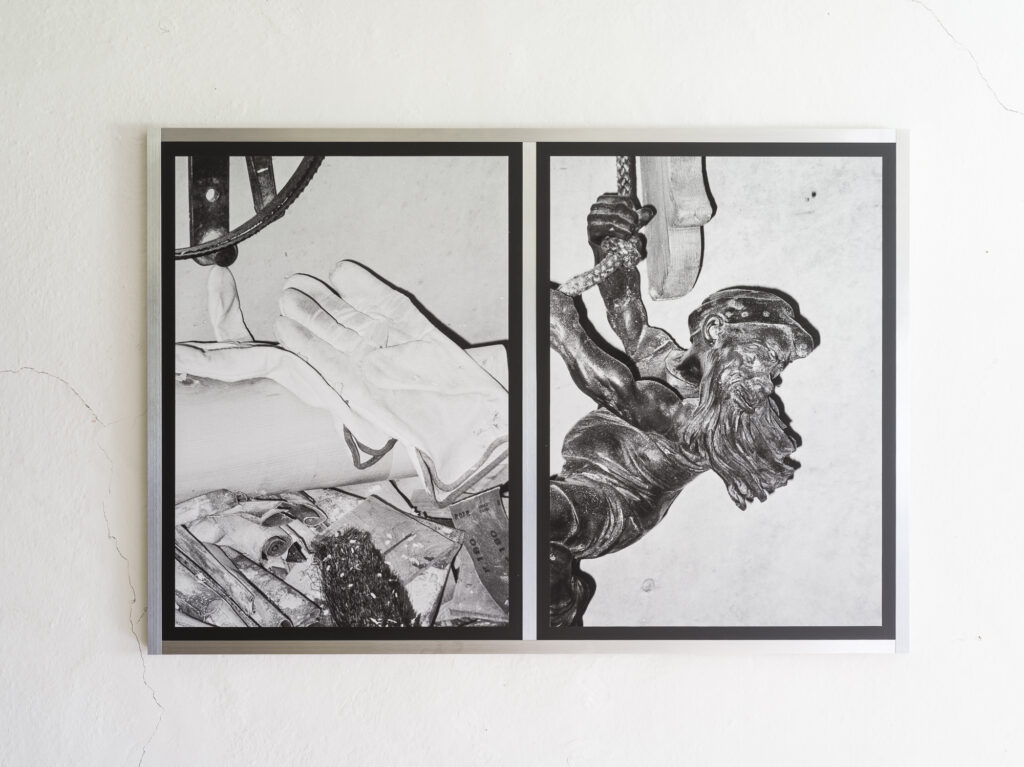
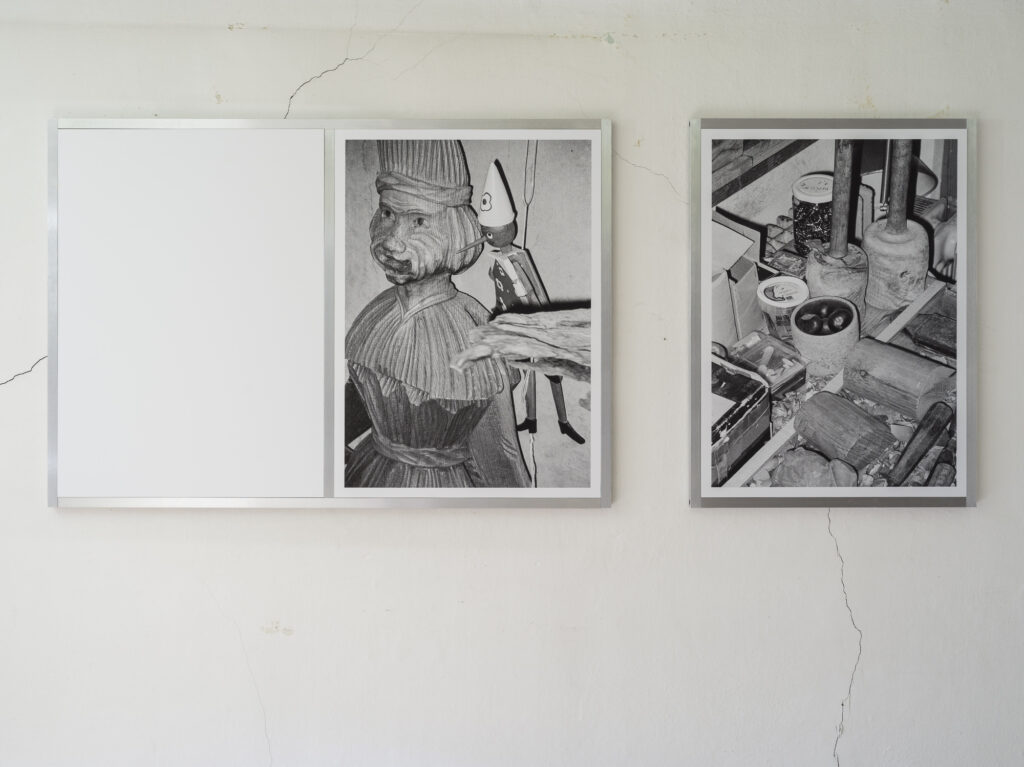
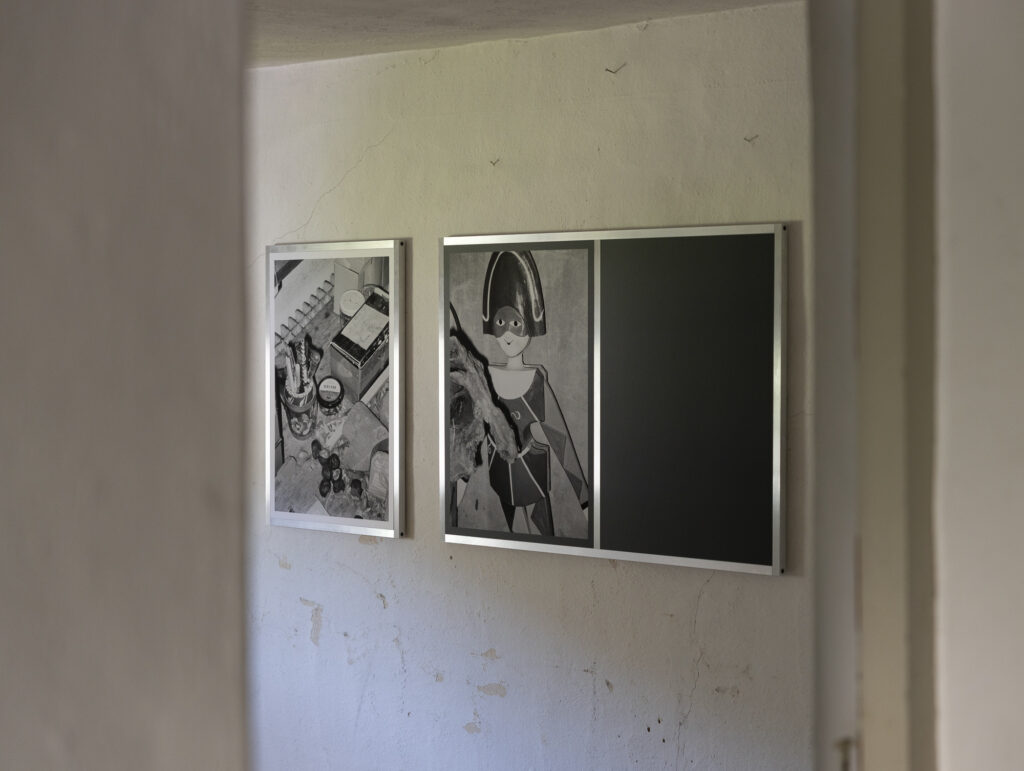
For (Future) Paradise Gardens, Tissot presents a site-specific photographic installation at Cësa Bënsté, a former school in Santa Cristina. Developed during a research stay in Val Gardena, where she shot over one thousand images, the work brings together photographs of wooden toys, sculptures, and behind-the-scenes views of local workshops.
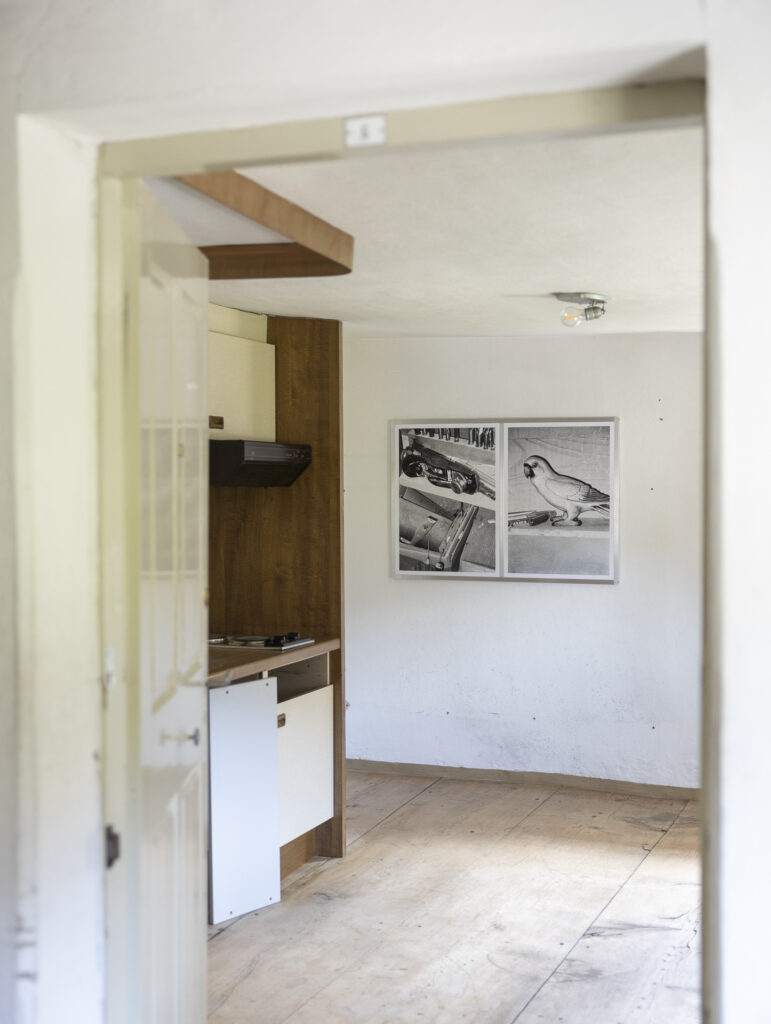
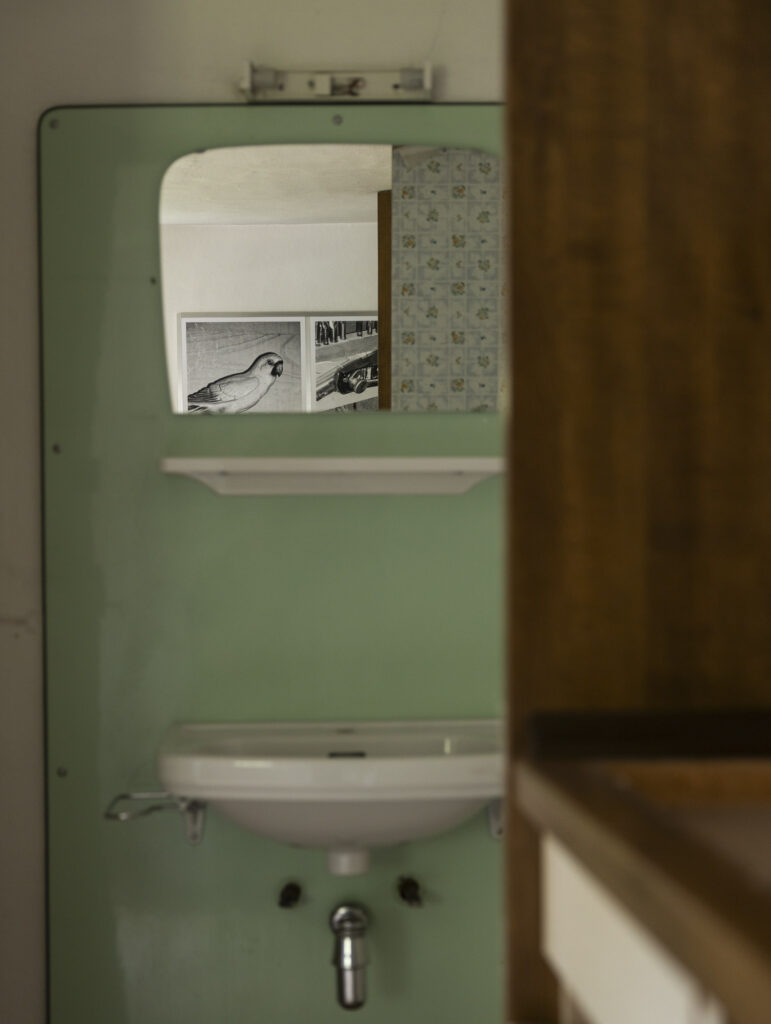
A selection of black-and-white photographs is dispersed across the abandoned second floor of the building. Installed in dialogue with its existing architecture, the images oscillate between documentation and staging, object and trace.
Through repetition and spatial distribution, these figures evoke a landscape shaped by both tradition and transformation, where vernacular forms persist within a context increasingly defined by reconstruction.
With the support of the Swiss Arts Council Pro Helvetia. | With the support of Nuovi Mecenati - Fondazione fran- co-italiana di sostegno alla creazione contemporanea. | Thanks to Chemun de Santa Cristina, Judith Sotriffer, Annemarie Grossrubatscher Delago, Sven Mumenthaler, Pascale Brügger and Julien Contant, Stefan Rudin
Has taken part in: