Dorota Gawęda & Eglė Kulbokaitė
∗1987, Lithuania, 1986, Poland
Dorota Gawęda (1986, Lublin, Poland) and Eglė Kulbokaitė (1987, Kaunas, Lithuania) and are an artist duo based in Basel. They both graduated from the Royal College of Art in London in 2012 and have been collaborating since 2013.Their artistic practice spans various media, from video and performance to installation and painting, often with the intention of creating immersive environments that engage different senses — including sound and smell. The Eastern European heritage of the two artists can be traced in many of the figures evoked in their works: lullabies and folk songs, mythological figures such as vampires or demons, and sacred rituals — all blended with digital manipulation and industrial materials, creating a bridge between human and non-human, natural and synthetic, reality and fiction. “Folklore is interesting to us because it provides itself to be shaped by communities through time and always remains fluid; it has the potentiality of providing us with counter-meanings and counter-stories.”
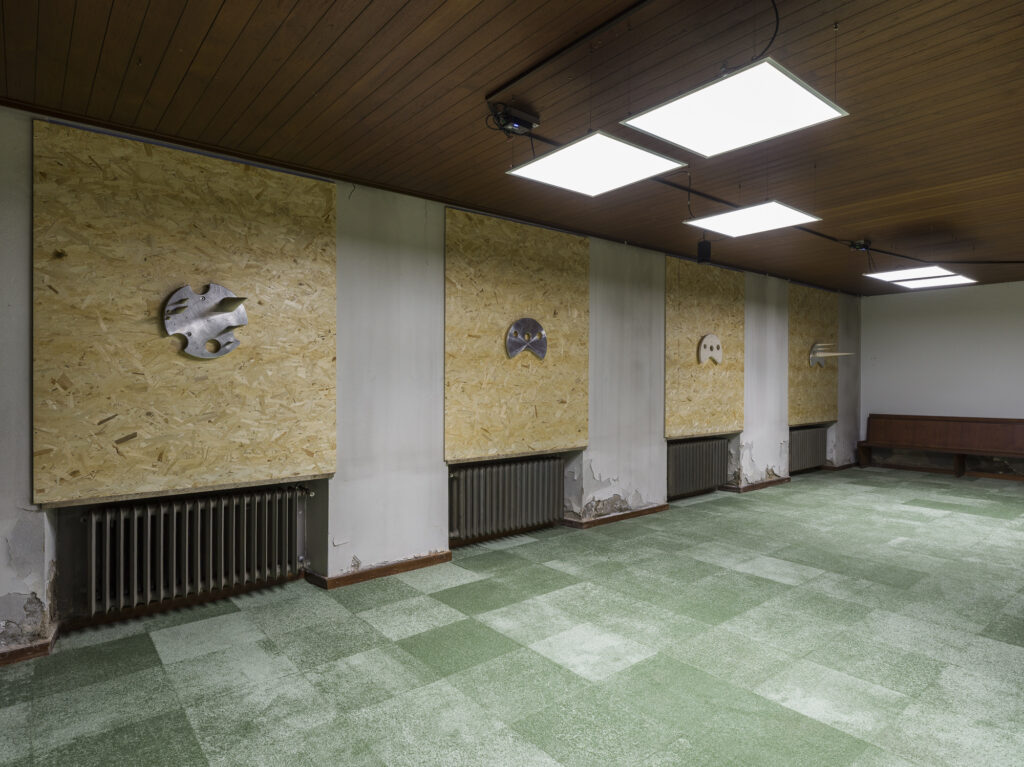
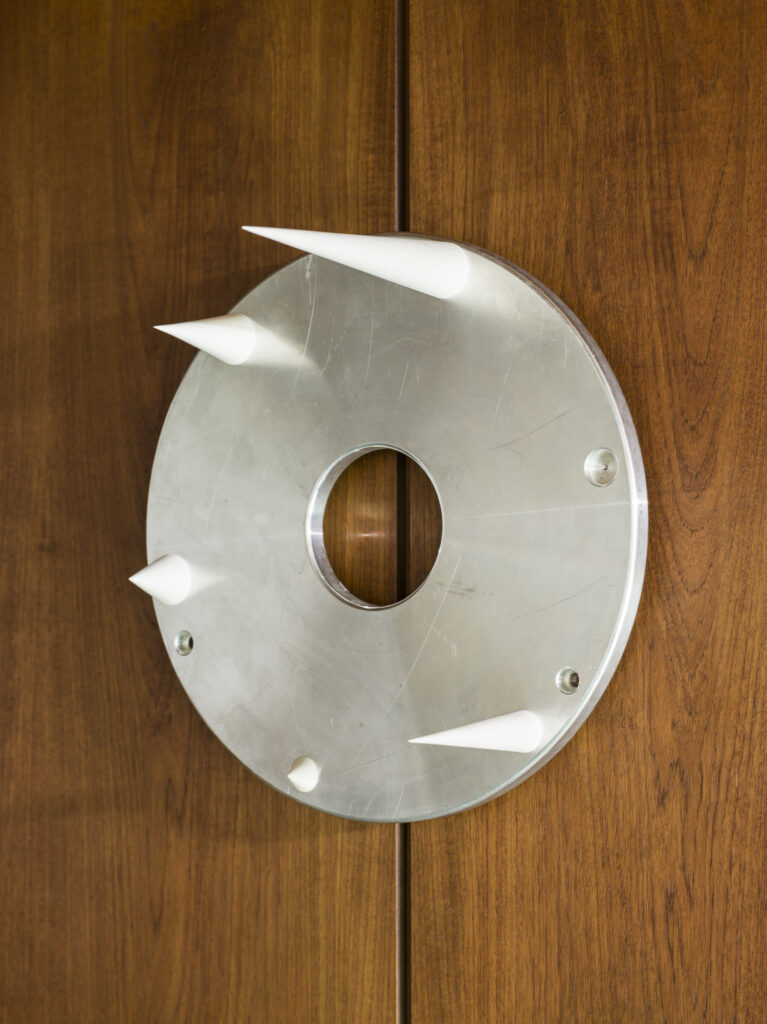
At Hotel Ladinia, Gawęda and Kulbokaitė present a site-specific installation combining sculpture, sound, and light. Elements from the Dead Ringer series—found aluminium objects sourced at CERN and soap-treated wood—are arranged in a state of activation, modulated through a choreographed lighting sequence that shifts between exposure and concealment. The sculptures, appearing as incomplete doubles, oscillate between presence and absence.
The installation unfolds through Brood (Scene 5: and her hair parted on the left side) (2026), a 30-minute sound loop developed with the polyphonic singing group Isokratisses in the tradition hailing from Epirus (a geographical and historical region in southeastern Europe, now shared between Greece and Albania) and the musician OXHY. The composition layers lullabies, laments, and love songs into a cyclical structure resonates with the mountainous qualities of the Dolomites. A 360-degree sound system circulates voices through the space, while calibrated light responds to their intensity, producing an immersive environment shaped by repetition, resonance, and subtle disorientation.
With the support of Lithuanian Culture Institute and the Embassy of Lithuania in Italy. With the support of the Swiss Arts Council Pro Helvetia | Thanks to the Krapf Family, Ernesto De Varda
Has taken part in: